Best weather in Gran Canaria for a wine tour
Best weather in Gran Canaria for a wine tour

Best weather in Gran Canaria for a wine tour

Gran Canaria weather is very popular for the amazing spring temperature the island has all year round. However, It’s very unknown for most people the varieties of climates all over the island. It’s hard to believe in such a territory you can be sunbathing while is snowing on the top of its mountains.  

Gran Canaria weather is very popular for the island’s amazing spring temperature all year round, making it a popular destination for a raft of outdoor activities. However, it’s also known for its unique microclimate, where it’s possible to be sunbathing in one region and snowing on the top of the mountains!

Talking about Gran Canaria’s weather is much like discussing our grape varieties or local wines. We have as many different temperatures and weather conditions as we do wines! Now that Autumn has arrived, most of Europe begins to get colder, but here on the islands, we remain above 20 degrees throughout the season. However, as you climb the mountains, the temperature dips and snow can be expected.

Experiencing the weather on a tour

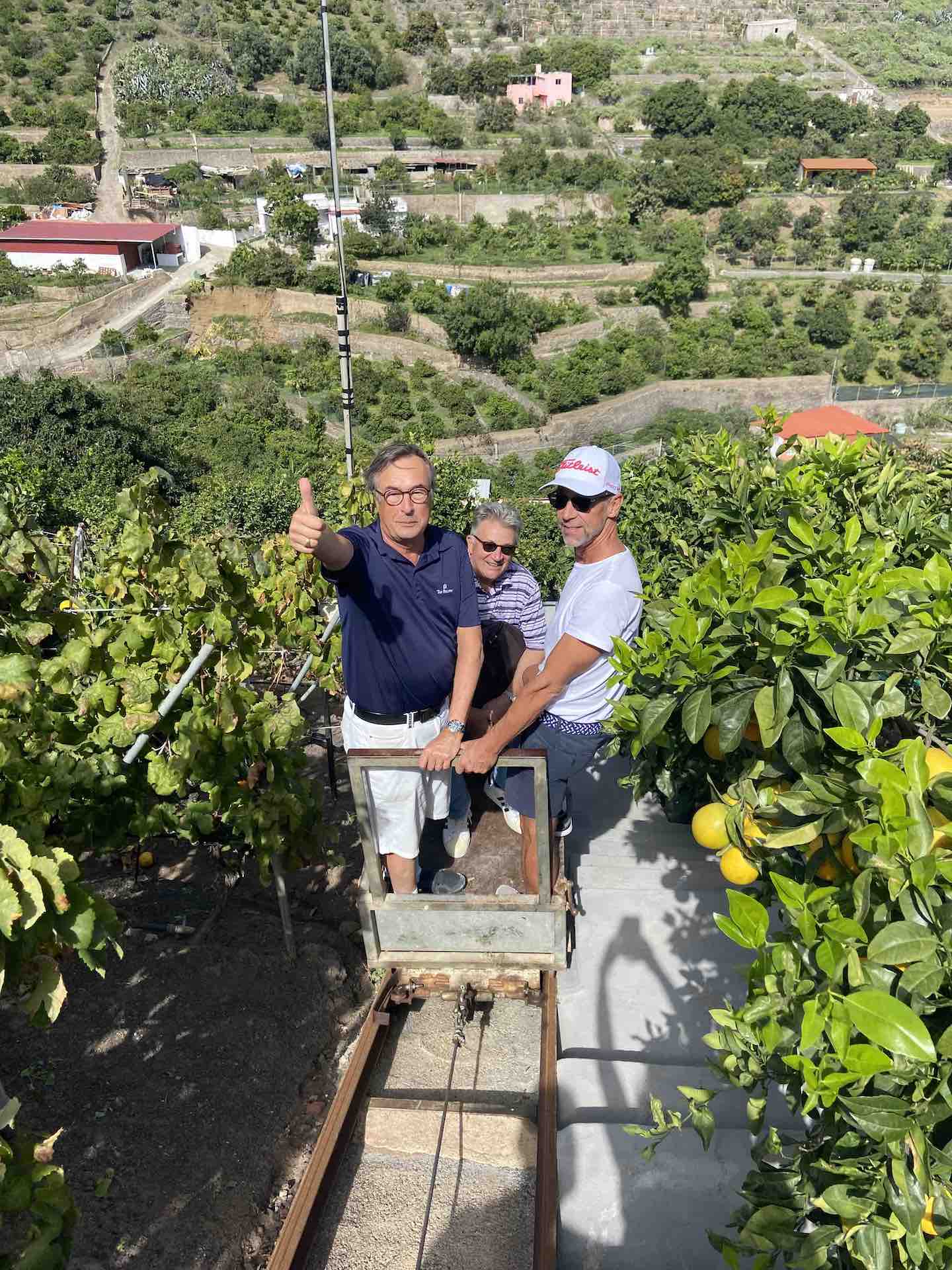
Last January, my dear customers Hans and his lovely wife Esther, called me again for a private custom tour. From Playa del Inglés I drove them to Tejeda, we took the road from Mogán through La Presa de las niñas. The road is scary, super winding and gorgeous. If you are highsick I wouldn’t recommend it. My dearest clients are from Switzerland, but they do trust me when I tell them, it’s going to be cold. To be honest, you never know on the top of the island. Even the summit has south orientation and north. The mountains are high enough to get stuck at north of the island, leaving the south clear. However, that wasn’t the case. That day we got cold, foggy, a bit of sunny a load of rainbows. It was so much fun, and cold and intrepid. We visited a cave at 1300m above the ocean level, a cave winery, with the most stunning views of Tejeda crater. In such an altitude the grapes get very extreme temperatures, both summer and winter.

Last January, some dear customers of mine, Hans and his lovely wife Esther, called me for a private custom tour. From Playa del Inglés, I drove them to Tejeda; we took the road from Mogán through La Presa de las niñas. The road is scary, super winding, and utterly gorgeous, although if you suffer from altitude sickness, I wouldn’t recommend it! 

Hans and Esther are from Switzerland, and they have taken a few Gran Canaria trips with me before, so they trusted me when I said it was likely going to be cold. That’s not always the case, as the mountains are high enough for weather systems to get stuck at the north of the island, leaving the south clear. However, on this particular tour, that wasn’t the case, and the day we got was cold and foggy with glimpses of sunlight that created beautiful rainbows.

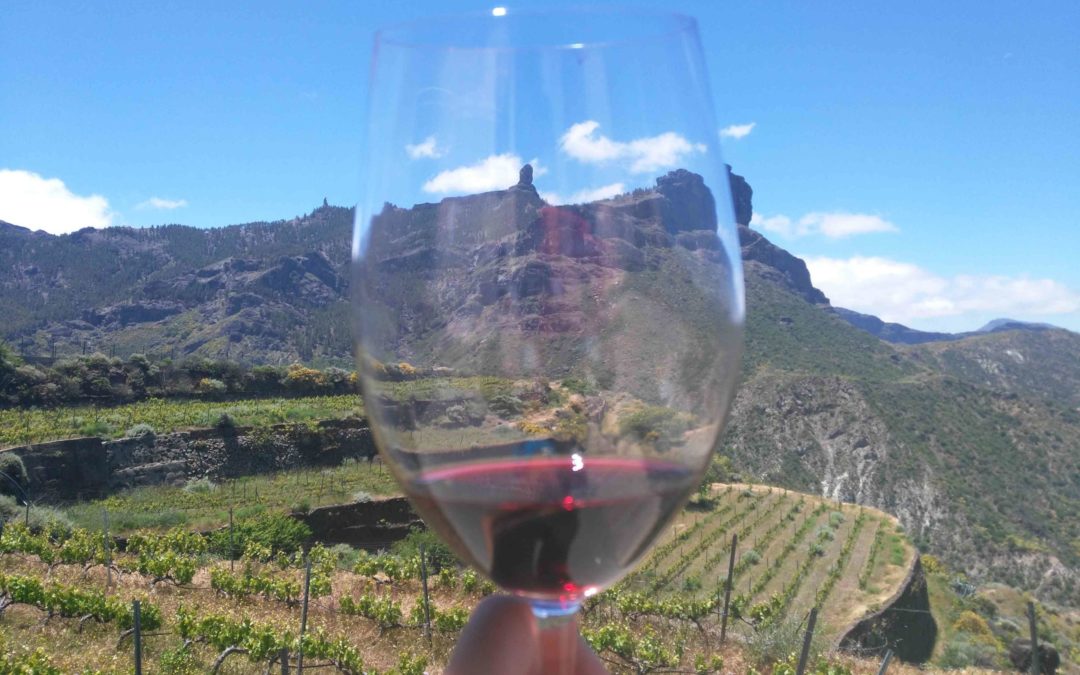
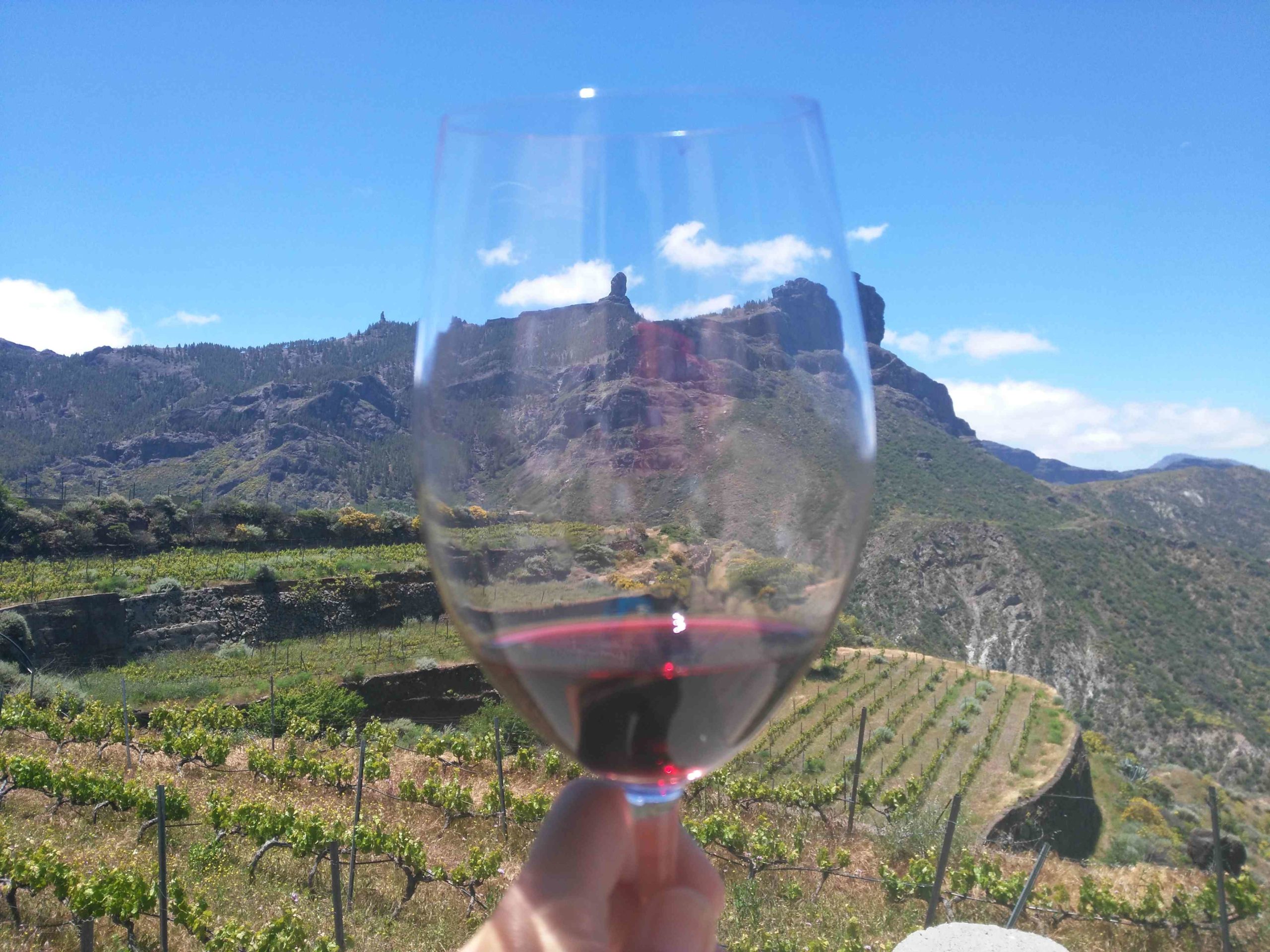
It was a day filled with fun, first visiting a cave winery that sits at 1,300m above sea level, offering delicious Canary wine and stunning views of Tejeda crater. At such an altitude, the grapes get very extreme temperatures, both summer and winter. To give you a quick idea, that day, we left Playa del Inglés with 21ºC to arrive in Tejeda with 6ºC – despite being only a one-hour driving distance!

The constantly changing scenery and amazing weather make outdoor activities a wonderful experience for holidaymakers looking for things to do in Gran Canaria. That day with my clients, we ended with a drive toward Las Palmas through San Mateo Village. Not only was it a beautiful way to end the day, but temperatures climbed back to 19ºC in the afternoon, making for a very pleasant finish.

Gran Canaria weather offers a real mix of hot and cold temperatures, which, when combined with the extreme altitude and volcanic soil, makes for some very special wines. Some of the vineyards in Gran Canaria are the highest in Spain, and it’s hard to beat the incredible views and delicious Canary wines!
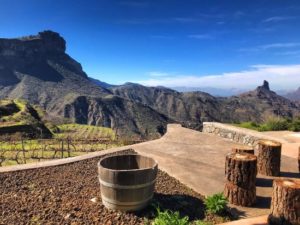
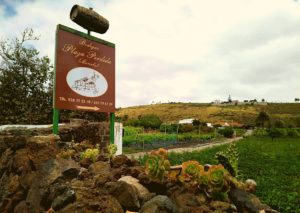
This cave winery is one of our favorite locations for a wine tour in Gran Canaria. Facing south, it receives ten hours of light during the spring and summer months, while in the winter, it can drop to as low as zero degrees, making it a truly one-of-a-kind winery! 

Recommendation: where to stay in Gran Canaria

If you want to escape the colder autumn weather, the best places to stay in Gran Canaria are along the east and south coasts. This is where you’ll find the best weather, but if you want to experience everything the island has in store, a Gran Canaria wine tour will take you from slope to slope, revealing a diverse landscape.

If the stunning views and changing weather were not enough, you’ll also love our Canary wines and the experience of meeting our one-of-a-kind winemakers. The island truly is a hidden gem in the world of wine tourism, offering stunning landscapes, unique wines, and a rich history of winemaking. So, no matter whether you’re a seasoned wine enthusiast or a casual drinker, a trip to Gran Canaria is sure to be an unforgettable experience.
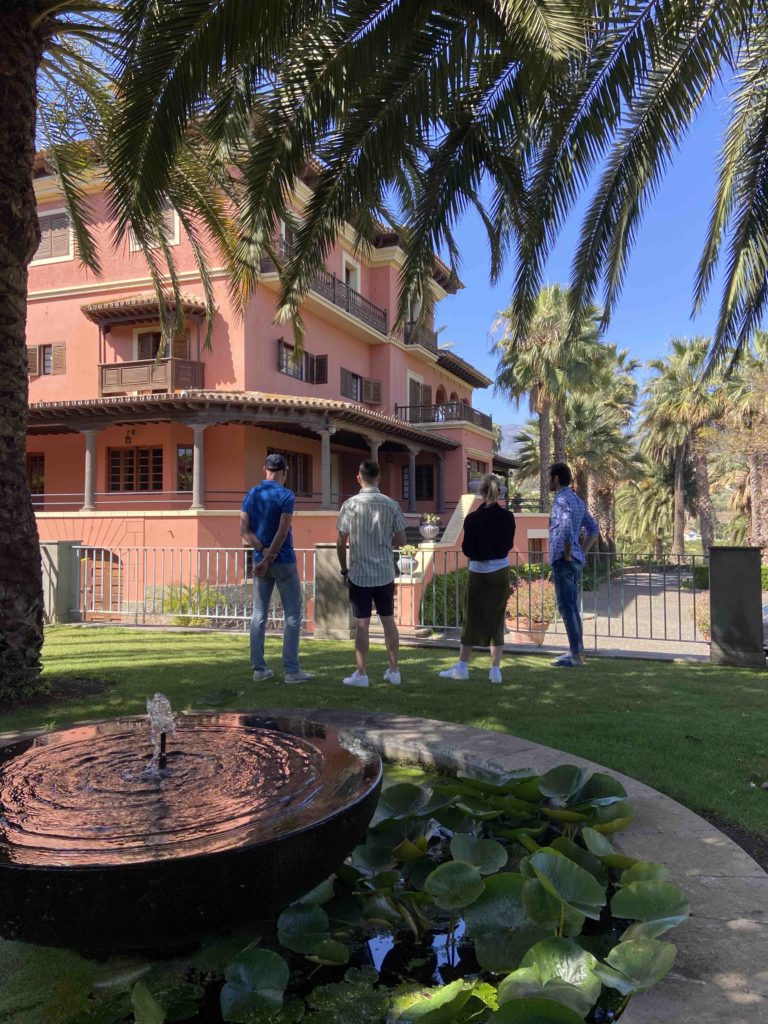
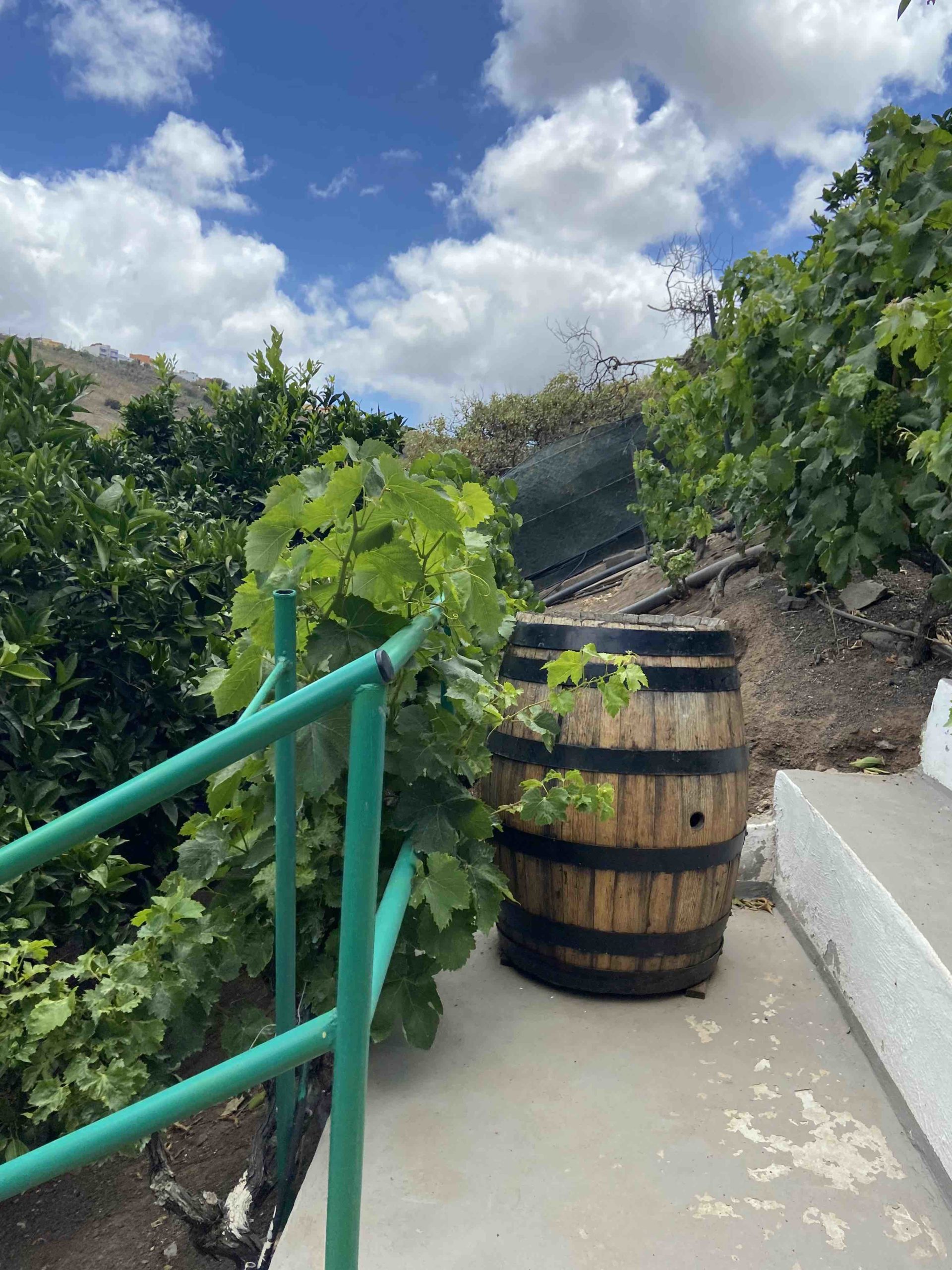
 

When looking for things to do in Gran Canaria, make sure you visit some of the island’s top wineries, try the local food pairings, and take in the beauty of the vineyards – just don’t forget to book your tours in advance to make the most of your experience.
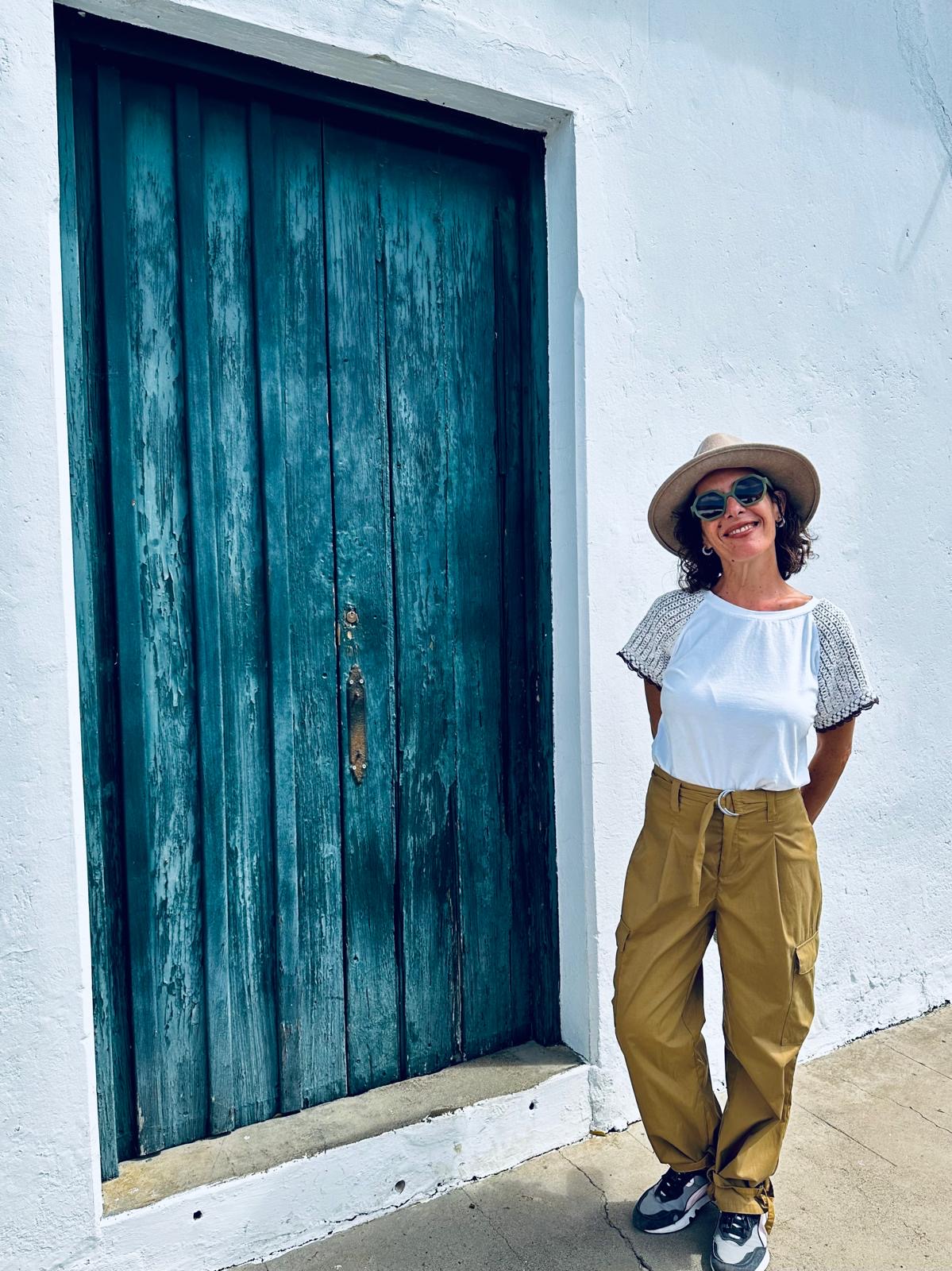
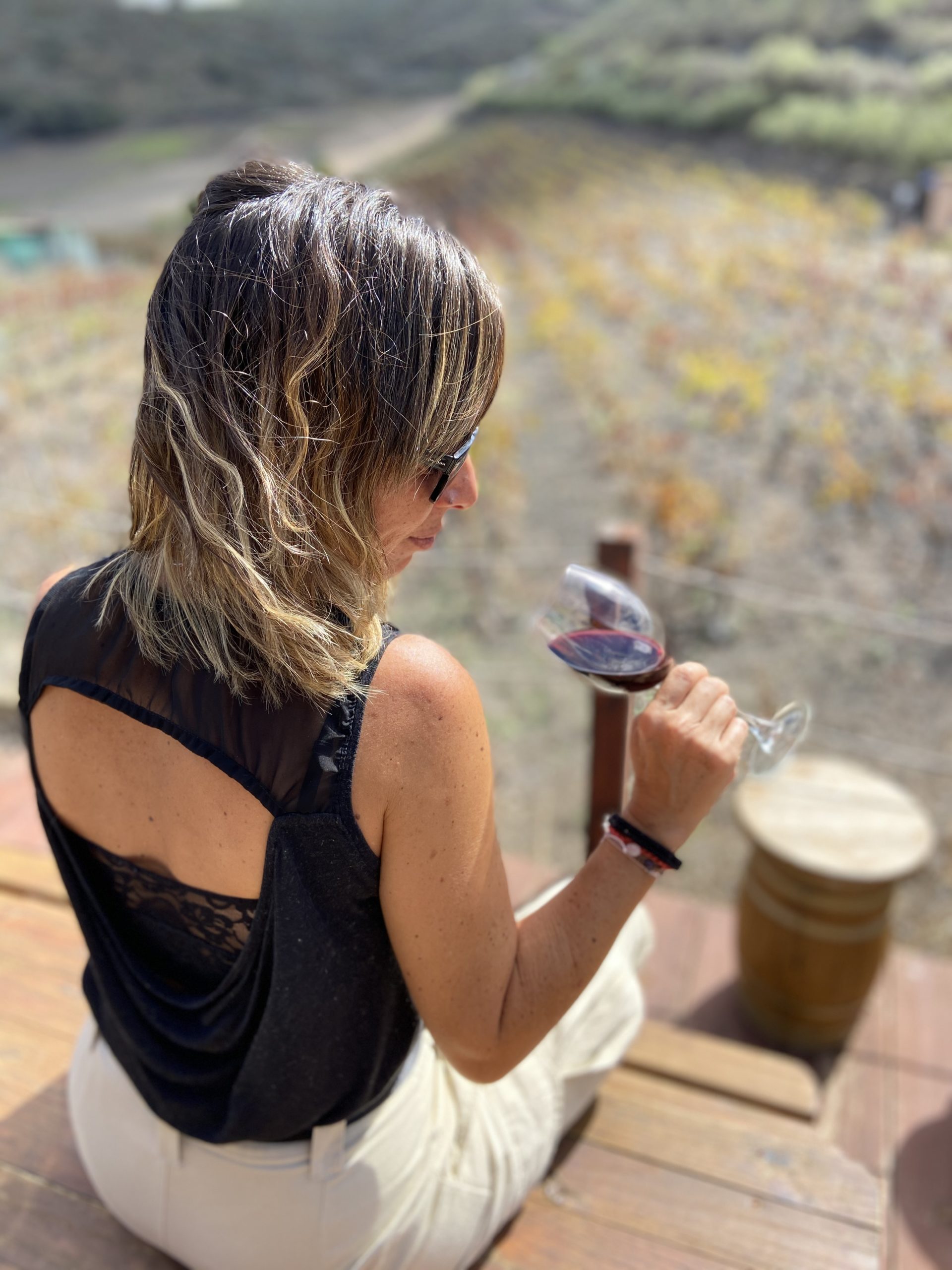
weather in gran canaria and wine tasting experience in Gran Canaria with scenic course and volcanic landscape

Ready to uncork Gran Canaria?

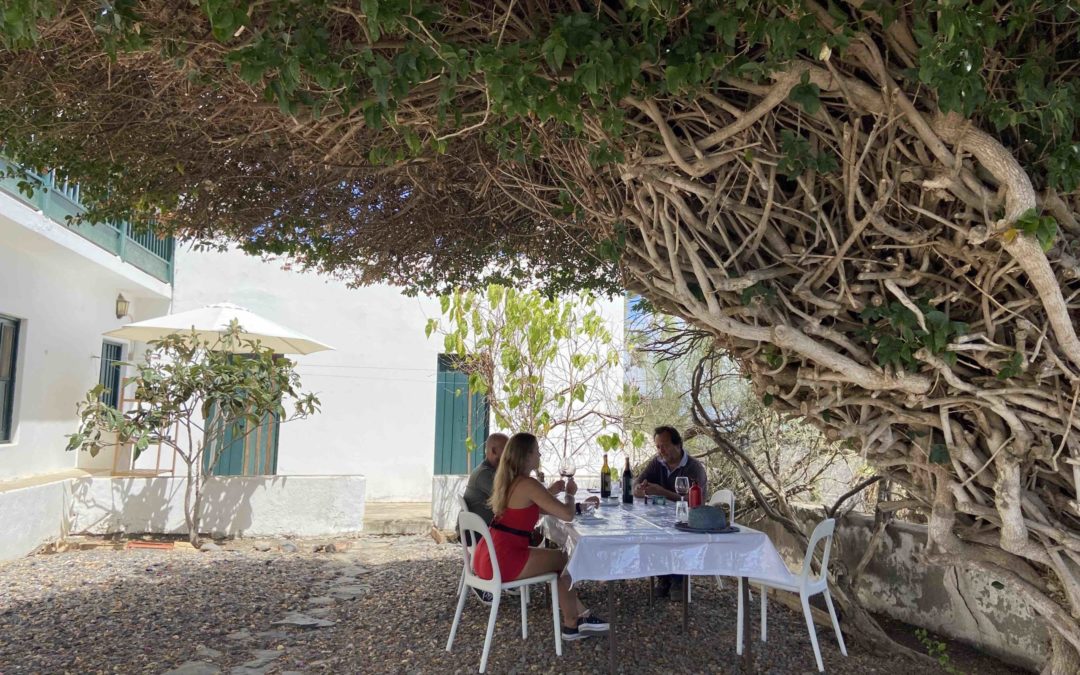
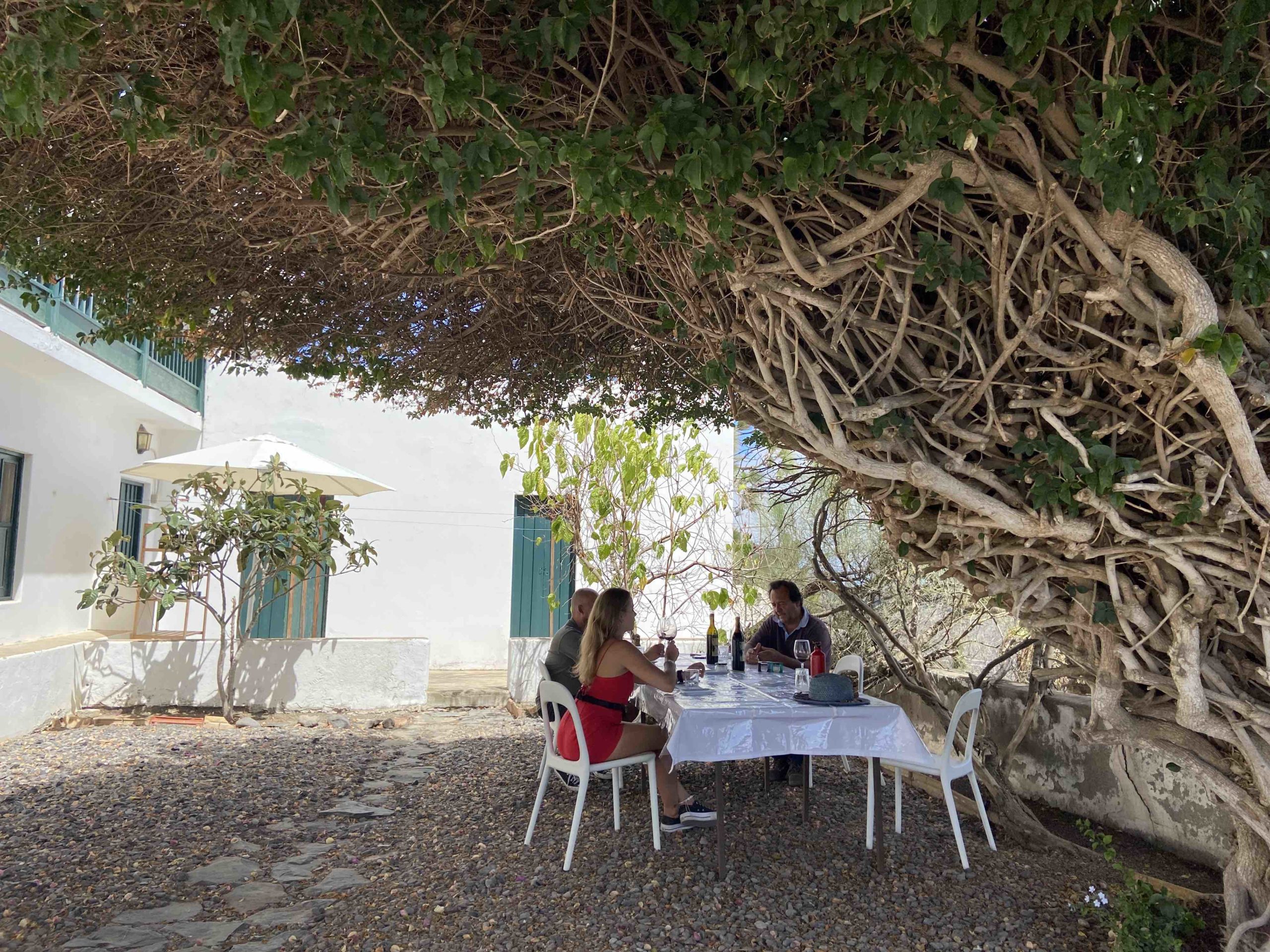
Thanks to the island’s mild climate, enjoying a wine tasting in Gran Canaria is possible all year round. Whether in the north or the south, the weather creates perfect conditions to explore local vineyards and outdoor experiences.

Related Articles

Related

Wine tourism in Gran Canaria

Wine tourism in Gran Canaria

Wine tourism in Gran Canaria

Welcome to the world of wine tourism, where sipping and swirling your way through vineyards is the ultimate way to experience the beauty of a destination. And when it comes to wine tourism, Gran Canaria might not be the first place that comes to mind, but believe us, this hidden gem in the Canary Islands is a wine lover’s paradise. From the rugged landscapes to the lush green vineyards, Gran Canaria offers a unique and unforgettable experience for wine enthusiasts. This island has a long and fascinating history of winemaking, dating back to the 15th century, and today, it’s home to some of the most impressive vineyards in Spain. So, get ready to explore this wine region, taste the unique flavors of the local wines, and get lost in the stunning vineyards of Gran Canaria. Join us as we take a journey through the wineries and vineyards of this beautiful island, and discover why Gran Canaria should be on every wine lover’s bucket list.

The History of Winemaking in Gran Canaria

Gran Canaria has a long and fascinating history of winemaking, dating back to the 15th century when the Spanish conquerors introduced grapevines to the island. The unique climate, with its hot and dry summers and mild winters, combined with the volcanic soil, creates the perfect conditions for growing grapes. The winemaking tradition on the island has been passed down from generation to generation, and today, it’s still a vital part of Gran Canaria’s cultural heritage.

In the 19th century, Europe was hit by a phylloxera epidemic that devastated the vineyards in the whole continent, and it wasn’t until the 20th century that the industry began to recover. Due to its amazing volcanic soil, the Canary Islands never suffered phyloxera. We grow  many varieties that disappears in Europe during the epidemic. That’s the reason why Gran Canaria grow ungrafted vines. This could help to understand the character of our Atlantic Ocean volcanic wines. There are around 11,000 hectares of vineyards on the island, and the wines produced here are known for their unique flavor and character. 

Vineyards of Gran Canaria

The vineyards of Gran Canaria are scattered throughout the island, from the rugged mountains to the coastal regions. The most famous wine region on the island is the Monte Lentiscal, located in the northeast of the island, where you’ll find some of the best vineyards and wineries. The region is home to several grape varieties, including Listan Negro, Tintilla, and Listán blanco, which are used to produce some of the island’s most famous wines.

In the south of the island, you’ll find the region of Santa Lucía, known for its stunning landscapes and unique wine production. The vineyards here are planted on steep slopes, and the grapes are grown using traditional methods, without the use of chemicals or pesticides. This region of old basalt terroir is known for its white wines in altitude, which has a distinct aroma and flavor.

Wine Tasting Experiences in Gran Canaria

Wine tasting in Gran Canaria is a unique and unforgettable experience. The island’s wineries and vineyards offer a variety of tours and tastings, where you can learn about the winemaking process and taste some of the local wines. Most wineries require reservations in advance, so be sure to book your tour ahead of time.

One of the most popular wineries in Gran Canaria is Bodega Las Tirajanas, located in the mountains of Gran Canaria above 1000m from sea level. The winery offers stunning views of the island and a range of wines to taste. 

Gran Canaria presents many microclimates, soil or altitude, giving as a results so many spectacular wines and overwhelming landscapes. Every vineyard is a different bottle of wine. 

Food Pairings with Gran Canarian Wines

Gran Canarian wines are known for their unique flavors and aromas, and they pair well with a variety of foods. One of the most popular dishes to pair with Gran Canarian wines is the local goat cheese, which has a tangy flavor that complements the wine’s acidity. Another popular pairing is the traditional Canarian dish of papas arrugadas, which are small, salted potatoes served with a spicy mojo sauce.

If you’re looking for a more formal dining experience, many of the island’s wineries offer food pairing menus, where you can taste a range of wines paired with local dishes. These menus are a great way to experience the unique flavors of Gran Canarian cuisine and wine.

Gran Canaria is a hidden gem in the world of wine tourism, offering stunning landscapes, unique wines, and a rich history of winemaking. Whether you’re a seasoned wine enthusiast or a casual drinker, a trip to Gran Canaria is sure to be an unforgettable experience. Be sure to visit some of the island’s top wineries, try the local food pairings, and take in the beauty of the vineyards. And don’t forget to book your tours in advance to make the most of your wine tourism experience in Gran Canaria and forget about everything else but enjoying your wine adventure.

Further info about our wine adventures

Handmade tours have been running wine and gastronomy trips since 2014. 

Check our amazing itineraries, and when you find your perfect wine match, contact us for further information. 

Now you know, Gran Canaria is also a destination to drink and eat until you have to go. 

Related Articles

Related

Haciendo planes: Enoturismo en Gran Canaria.

Haciendo planes: Enoturismo en Gran Canaria.

Si desconoce que Gran Canaria produce vino, entonces le sorprenderá saber que la bodega que nos vamos a beber a continuación tiene más de 250 años. Lo ha leído bien y además tenemos un testigo para confirmar esta información.

En esta cuenta atrás seguimos haciendo planes y practicando enoturismo en Gran Canaria. Los espacios abiertos serán la mejor alternativa al ocio y toda bodega en Gran Canaria tiene un maravilloso espacio exterior, donde los vientos alisios se encargan de limpiar el ambiente para que sus invitados puedan disfrutar con seguridad una jornada muy embriagadora al sol.

handmadetours private wine tour

Caldera de Bandama

Para mi los detalles a la vista son muy importantes. La belleza del entorno del monumento natural de Bandama ya es indiscutiblemente agradable. Pero se suman muchos características en esta región. ¿Preparados para visitar otra bodega? Bienvenidos a Plaza Perdida.

El nombre de esta bodega se me antoja misterioso y claro, los muros que rodean esta propiedad de piedra seca volcánica suman ese toque tan reservado. Tiene un cartel en la entrada con un barril pequeño y una imagen del testigo que ya les mencioné líneas arriba.

Entrada plaza perdida retocada

Bodega Plaza Perdida

El camino de entrada que lleva a la vivienda y bodega de esta familia divide la primera finca en dos. Por un lado cultivan papas y por el otro ya podemos disfrutar de las vistas de la primera parte de su viñedo.

don-marceloMarcelo Robaina es quién esta al frente de esta bodega y toda su vida la ha dedicado a producir vino y a sus tierras. Personalmente Marcelo es ese bodeguero entrañable que nunca me dice que no a mis visitas intempestivas de un día para otro con o sin clientes, que siempre te recibe con una sonrisa y además feliz de mostrarte sus tierras y sus vinos.

Una pequeña parcela de su viñedo se conserva en vaso. Así se denomina el método tradicional donde la vid crece sobre su pie franco. En el viñedo más actual y en espaldera podemos encontrar vides de más de 150 años y de donde el resto de sus variedades proceden. Les hablo de un viñedo que en su mejor año ha recolectado 25mil kilos de uvas solamente.

Viñedo Plaza Perdida

Bodega Plaza Perdida

Todo lo referente a su viñedo tiene los mimos de una producción manual. No son amantes de químicos y apuestan por partidas pequeñas pero exquisitas. Marcelo sólo cultiva 3 variedades blancas (Listán blanco, Malvasía volcánica y Moscatel) y una tinta (Listán negro). De estas variedades obtiene un blanco seco, un tinto joven y otro tinto envejecido tres meses en barrica francesa. Y sus vinos pertenecen a la Denominación de Origen de Gran Canaria.

Vinos Plaza Perdida

Vinos Plaza Perdida

De las cosas bonitas que me gusta resaltar de la producción de Marcelo es que sigue filtrando sus vinos con clara de huevo. Utiliza dos claras batidas por cada 100 litros de vino. Es un proceso tan antiguo como romántico y quién lo conoce sabe que es el mejor clarificante. Es una fase absolutamente física donde la proteína ovoalbúmina de la clara atrae las cargar negativas a las positivas. De tal manera que restos como trozos de hojas, tierra u hollejo se arrastran al fondo de los tanques. Y como se trata de un producto que contiene alcohol el vino no se descompone.

Y para concluir este paseo por Plaza Perdida no podíamos marcharnos sin presentarles al testigo de todo lo que ha estado ocurriendo durante más de 200 años en esta hacienda.

lagar plaza perdida

Lagar Plaza Perdida

Y es que como ya les he comentado con anterioridad, en Gran Canaria entrar en una bodega es como visitar un museo de historia. Y lo menos que te puedes despachar es un lagar hecho a mano.

Me cuenta Marcelo que esta pieza de museo ya estaba en la propiedad cuando su abuelo la compró. Cuenta ya unos 30 años de la última vez que se puso en marcha, más por temas de higiene que por funcionamiento. Elaborado a mano con piedra de cantería canaria y madera noble en piezas que se armaban tal que un puzzle y donde cada vendimia se ponía en marcha para prensar la uva.

Ahora este majestuoso lagar hace de guardián de esta bodega con nombre enigmático y caldos volcánicos. Muestras indiscutibles de identidad de nuestra viticultura en Gran Canaria.

Tinto Barrica Plaza Perdida

Captura de pantalla 2020-05-09 a las 18.27.20

Variedad 100% Listán negro.
Barrica francesa 3 meses.

Color rojo cerezas con tonos violetas, extensos aromas frutales específicos de la uva listán negra y al gusto seco, con cuerpo que perdura y recio sabor.


Para visitar Plaza Perdida visite: http://bodegasplazaperdida.es/

Good News, Good Food.

Good News, Good Food.

We have all heard before this popular quote “Life is good”. During these days, many people are struggling while staying home wondering, is it life good, for real? Let me share with you all those good news that are going on while we stay safe home. Life is Food: Small introduction As we already knew, for many years now, primary sector is going through a crisis where small productions are disappearing. In small territories such as the Canary Islands, small producers compete with national products, which are cheaper than ours in the markets. How’s this occurring? Good Food, Good news. Who would say this virus situation would help to local producers and bring primary sector up to where it deserve? Who’s risking their health to bring food to our homes? Good news such as the fact that delivery service is growing massively and consumer and switching supermarkets to small producers deliveries. Adding help to this sector, Cabildo de Gran Canaria has rushed to open a digital platform to help our producers. The well-known Gran Canaria Me Gusta brand, had already planned this second stage for a shorter future, and due/thanks to this emergency situation, and in order to bring together producers direct to customers, they’ve just launched this digital platform.
200 producers and their local productions can be easily found and goods purchased thanks to this marvelous initiative. So life goes on in the countryside and we can help our local economy while the confinement ends. More now than ever, we have to be very conscious in what we eat to help our mind and body health. The good vibes’ chain is growing and we are all part of it. And this is the first big step we can monetary help this situation while emergency situation last. I am fully convinced this situation will lead to a better version of us and by already a fact, to a restore earth. Our marvelous planet is having a break and the soil we grow our food is also improving. So do not loose hope, we are existing and everything happens for a reason. And while we stay home good things are happening, for real!!
Source: Noticias desde wordpress.com
WINE MAKING: CRAZY ROMANTICISM

WINE MAKING: CRAZY ROMANTICISM

After a few years learning about wine making, I’m certainly sure winemakers are crazy. More I learn, stronger I believe it. If you would briefly know how much effort is involved in your bottle of wine, we would all make a ceremony before we open them. Do not take me wrong, I’m fascinated by winemakers. What I like most about this craziness Is that It’s absolutely bonded with romanticism. All related to winemaking is love. They talk about the vines, the grapes, their vineyards and even the bottles with pure feelings, as they were all human beings, as they were alive… Well, they are! 🙂 It is already winter and this is the time pruning takes place. Pruning is the most important in winemaking. Why? Simple, they are preparing their babies for next harvest. Each variety, every territory or climate are some of the things they have in mind when making their vines a new cut. Yes, as they were at the hairdresser. Do not think they just cut and go? NO NO NO! Each variety is different and they have different necessities, as all of us. We should know which haircut fits us better, right?  When cutting a brunch they are making a stronger, wealthier, healthier and richer quality future vine among others. As a summary a better wine. In the Canary Islands at some regions, the weather is warmer and that confuse our vines. In response the plants start growing and they don’t “fall asleep”, as the winemakers refer to the autumn season. You see? the vines fall asleep, isn’t that romantic? And that is also why winemakers wait until winter to prune it. During autumn the vines “fall asleep”, that means the salvia goes back to the trunk and routes. So the brunches are getting ready to be cut and they won’t suffer or lose energy. That is why in our archipelago our vines “cry” more. Again, they say their vines cry when the brunches tear salvia, RO.MAN.TIC! Once I watched in a wine documentary, a winemaker who said, that he had been involved in wine making for 50 years, and he knew he would die not knowing all about it. And that got under my skin! And after six years of my amazing wine tours I understand what he meant and also their romanticism. I also hope they are as romantic in their life as they are in the field!! 😉  So I hope to keep entertaining you all with all these stories about the Canary Islands wine and make you as addicted to them as I am. So do not forget to be conscious when opening and drinking your wine and please, keep drinking local wine wherever you are! And as soon as you land in Gran Canaria and start your searching in things to do in Gran Canaria while visiting, do not hesitate to visit our local wineries and try some wine tour, wine tasting and get the best of your local experience.  Long live to such a craziness. Salud amigos!

And remember, by visiting local productions and business, you are collaborating to diversify mass tourism located in touristic areas towards local areas and you are also helping our local economy. Among others you are being responsible with the impact of your visit. Thank you!

Sustainable tourism is an option.

Source: Noticias desde wordpress.com

WHAT ARE THOSE WASTES AT THE BOTTOM OF MY GLASS OF WINE?

There’s no better way to end a day than having a wine tasting. Where there is wine, there is a lot of joy. Always!

We were a party of five at a winery at South East Gran Canaria towards the mountains, to be more precise, at a 1000m above the sea level. Our day was finishing with a wine tasting at Bodega Las Tirajanas. Having our third wine, a glass of dry rose, one of my guest pointed the sediments at the bottom of the glass. Debate on the table had been served: What are those minerals in our glass? Is this ok? Is the wine good? Some guests already knew about them and some did not.

You might probably have seen the same while drinking a wine before. Any white, red or even rose wine. We can’t forget that wine comes from grapes, and it is absolutely normal to find these solid remains at the bottom of our glass.

While making wine, winemaker transfers the wine from tank to tank in order to filter it. Some of those rests are hard to leave behind and in some cases some winemakers like to leave them there. These sediments help to keep good state of preservation. At some cases these sediments naturally develop in the bottle after certain time. They are natural solid remains from the grapes, nothing more.

Once I was back home, I looked at the picture of my glass of rose and it came to my mind the precious stone Ruby. Was it red/orange ish? I thought to myself. And I did a quick research: Mr Google! show me Ruby!. I asked my laptop as I was talking to the magic mirrow of Snow White’s step mother, the Black Witch. And there it was, and yes! it is red/orange like the sediments of my rose. And as I’m a bit curious, I couldn’t help to keep finding out a bit more about the meaning of this treasure and its colour.

Apparently orange stones that nature offers us are usually associate with happiness, energy and creativity… Stones with orange colour represents joy and sociability, gathering together its yellow colour with happiness and its red colour with passion. Wouldn’t that be another great description of “wine tasting”? On the other hand, red colour is related with passion, love, prosperity, emotions and strong feelings. Red stones are used to make your body strong and to have corauge, one of the reason they are used to get rid of insecurity and weakness. Isn’t that what winemakers do when making a better wine year after year?

Either way and after sharing my crazy thoughts with you all, I believe those sediments look pretty much as precious stones. Another reason to love wine. So if you are looking for things to do in Gran Canaria while visiting, Take the time to visit our wineries and let our winemakers and territory make you fall in love once again with your holiday’s feeling.

And remember, by visiting local productions and business, you are collaborating to diversify mass tourism located in touristic areas towards local areas and you are also helping our local economy. Among others you are being responsible with the impact of your visit. Thank you! Sustainable tourism is an option.

Follow US!

Source: Noticias desde wordpress.com

Book Now Book Now