Tejeda Gran Canaria: You Have Never Seen It Like This
Tejeda Gran Canaria: You Have Never Seen It Like This

Tejeda, Gran Canaria: You Have Never Seen It Like This

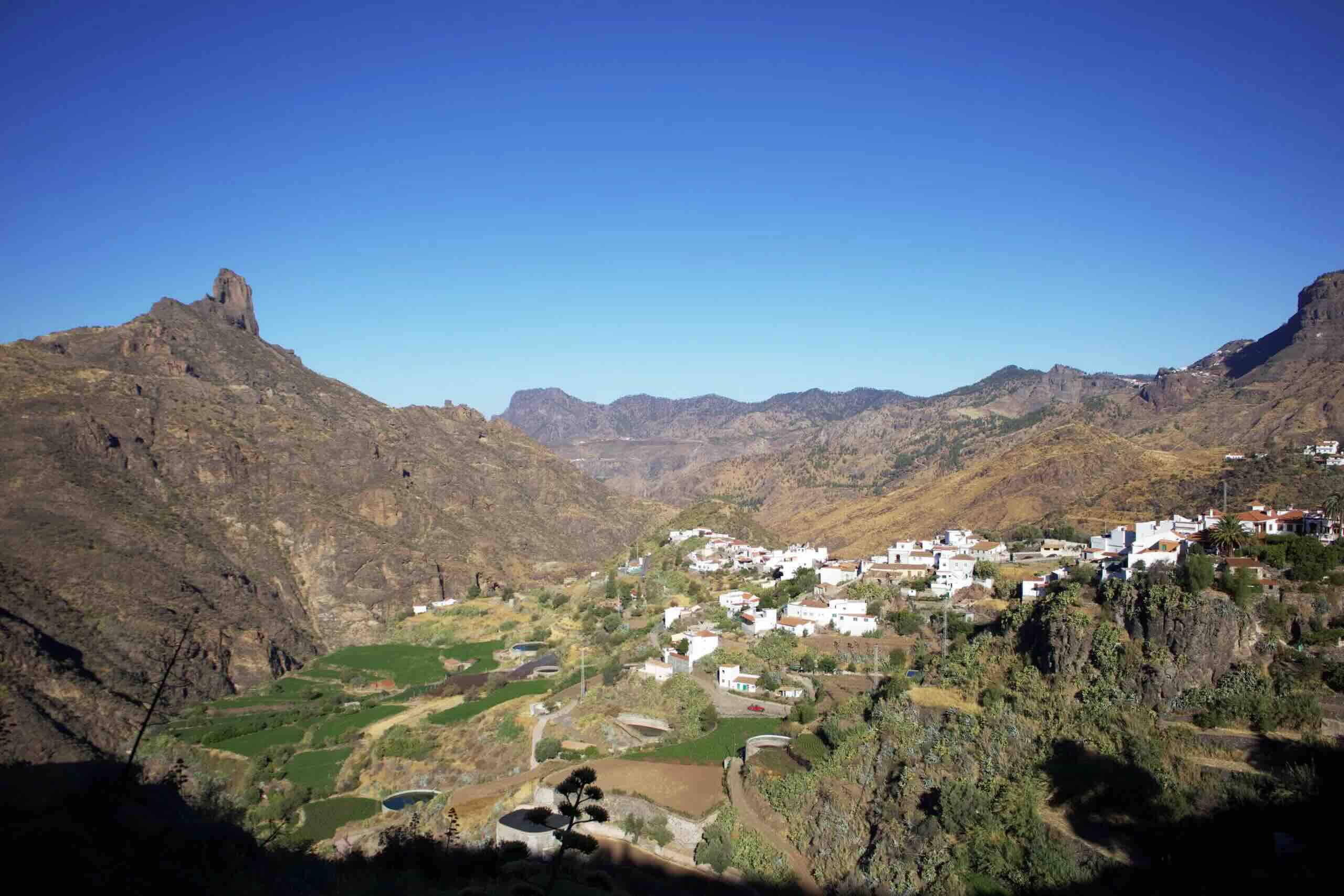
The ancient forces that created the immense landscape you are admiring today

I’m going to show you how to look at Tejeda differently — our way.

There are already hundreds of articles telling you what to do in Tejeda: Roque Nublo, almond blossom, viewpoints and hiking. And rightly so — they are among the reasons Tejeda is one of Gran Canaria’s most admired places.

This article is different.

We are going to start long before Tejeda existed. Before its white houses and almond trees, before shepherds crossed these mountains and before the first inhabitants of Gran Canaria made some of these peaks sacred.

We are going to start with the land itself.

Because that immense landscape is the result of millions of years of volcanic activity, geological transformation and erosion — the territory where generations would later learn to live, cultivate and graze their animals.

And once you understand that landscape, Tejeda begins to change before your eyes.

So yes, we will talk about things to do in Tejeda, Gran Canaria. Just perhaps not the things you were expecting.

You already know the postcard. Now let us show you what you are actually looking at.

The Giant Caldera Behind the Tejeda Postcard

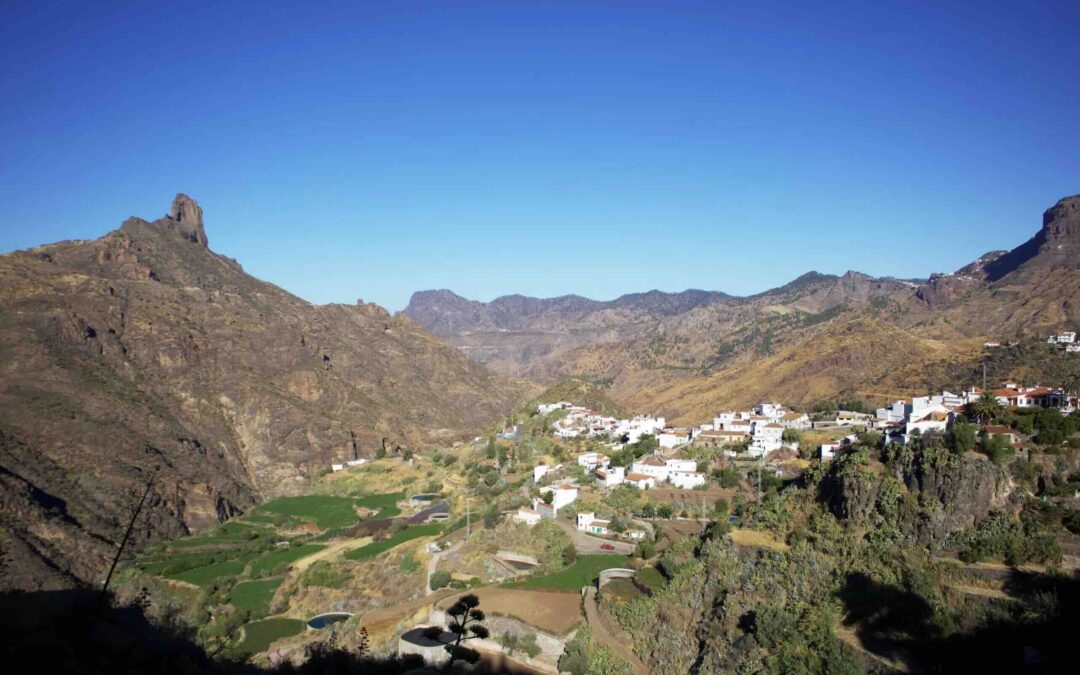
Before looking for what to do in Tejeda, stop for a moment and look at the landscape itself.

Those cliffs, ravines and rock formations are remains of one of the most dramatic chapters in Gran Canaria’s volcanic history.

Around 14 million years ago, major volcanic events culminated in the formation of the Caldera de Tejeda — the largest volcanic caldera on the island, approximately 20 kilometres across. Collapse and millions of years of erosion transformed it into the immense landscape we see today.

Erosion prevented the caldera from remaining a perfect volcanic bowl, carving ravines while leaving some of its hardest formations standing.

Among them are two silhouettes almost everyone visiting Gran Canaria recognises today: Roque Nublo and Roque Bentayga.

They are not decorations placed in the landscape. They are survivors of it.

You are standing inside the story that created it — and inside the largest volcanic caldera on the island.

From Roque Nublo to Roque Bentayga: The Sacred Mountains of Tejeda

You may have come to Tejeda with Roque Nublo already on your list — and it absolutely deserves to be there. Its silhouette is one of the great symbols of Gran Canaria.

But now that you know you are standing inside an ancient volcanic landscape, look around once more. Another extraordinary rock rises from the heart of the Caldera de Tejeda: Roque Bentayga.

Before approaching it, go inside first.

The Roque Bentayga Interpretation Centre gives you something no viewpoint can provide: context. Bentayga was not simply an impressive geological formation for the ancient Canarians. This was an inhabited landscape, with cave dwellings, collective granaries and defensive structures, but also a place with profound spiritual significance.

At the rock is an almogarén — a sacred ceremonial space — associated with the observation of the sky. Archaeological and archaeoastronomical research has revealed relationships between this place and the movements of the Sun and Moon.

The ancient Canarians cultivated the land and raised livestock, with an intimate knowledge of these mountains, pastures, water and pathways. Pine forests then occupied a much greater part of Gran Canaria’s highlands.

That knowledge of the land mattered. The Castilian conquest of Gran Canaria was not immediate: the campaign lasted around five years, and these central mountains formed part of the final resistance. Bentayga itself served as a fortified refuge.

You do not need the entire history of Gran Canaria to appreciate what happened here. Stand beneath Bentayga and understand that this landscape was once home, pantry, pasture, sanctuary and fortress at the same time.

Then look around.

From Roque Bentayga, the scale of the Caldera de Tejeda is almost impossible to take in: ravines, ridges and rock formations rise and fall across the heart of Gran Canaria.

You are not looking at the caldera from the outside.

You are standing right in the middle of it.

And if you can, stay until late afternoon.

Just before the sun disappears, the last light falls almost horizontally across the mountains, catching one ridge after another. Every fold and scar in the landscape seems to emerge at once. The earth changes colour, the rocks glow and the enormous relief of the caldera becomes visible in a way midday light cannot reveal.

It feels cinematic — almost unreal.

Perhaps this is when the name Sacred Mountains begins to make emotional sense. Long before us, people stood within this same landscape, watched the movement of the sun and gave particular places within it meaning. Today the territory forms part of the UNESCO-listed Risco Caído and the Sacred Mountains of Gran Canaria Cultural Landscape.

For a few minutes, simply watch.

You don’t need anyone to tell you these mountains are extraordinary. At sunset, they show you themselves.
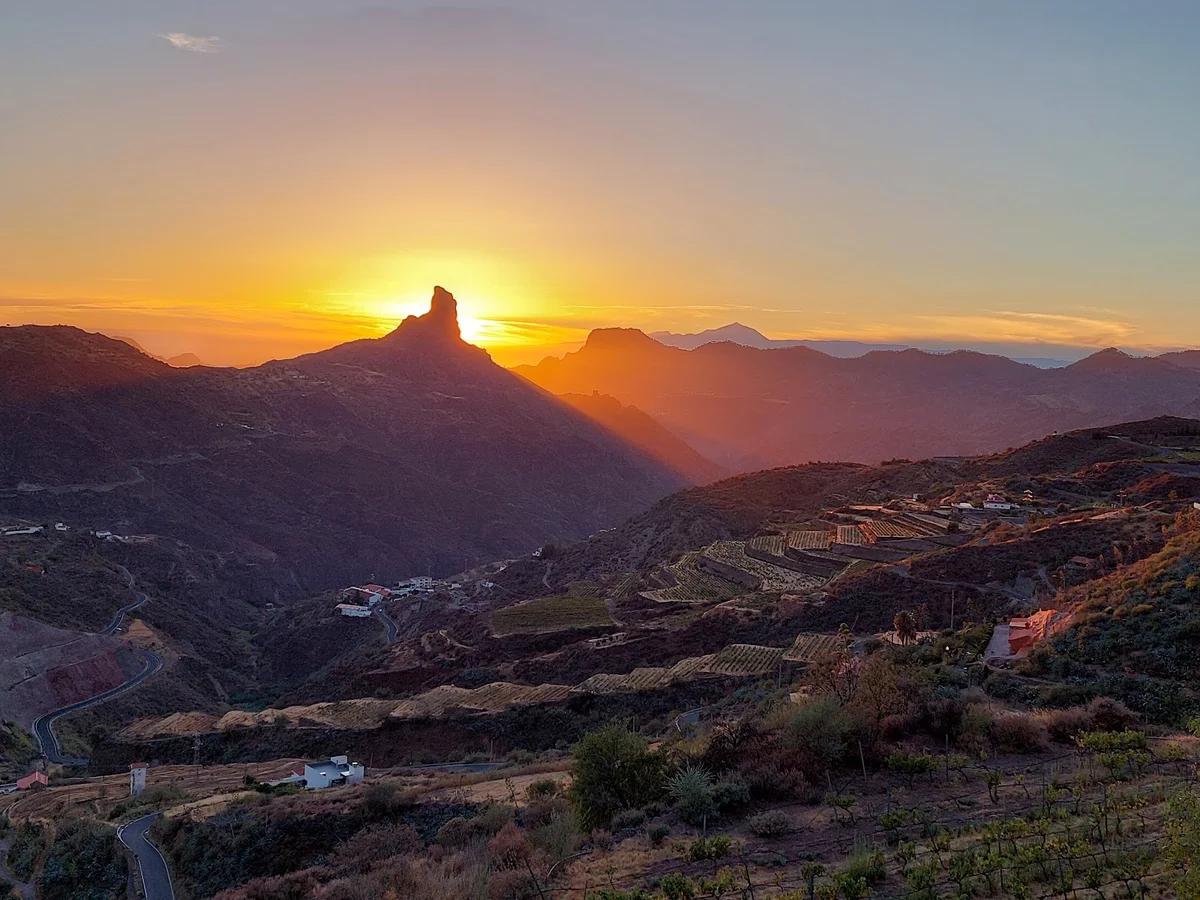
Roque Bentayga sacred top

Cheese from the Gran Canaria Highlands: When the Mountains Become Flavour

From the ancient Canarians, one tradition continued through the centuries and remains deeply rooted in Gran Canaria today: livestock farming and cheese making.

Gran Canaria has more than 80 artisan cheese dairies, many of them small family businesses. Around Tejeda, the relationship between animals and territory becomes particularly fascinating.

Here you will hear people talk about quesos de cumbre — highland cheeses.

The animals graze across terrain where vegetation, humidity, altitude and exposure can change dramatically from one slope to another. What grows under their feet eventually becomes part of what you taste.

This is also a territory where transhumance has survived. For generations, shepherds have moved their herds across Gran Canaria in search of seasonal pastures, following old paths between different areas and altitudes.

Small dairies around Tejeda continue this tradition. Quesería Naroy, run by twin sisters Beatriz and Natalia Mayor, works with its own goats and sheep and maintains grazing and transhumance; its cheeses have been recognised locally, regionally and at the World Cheese Awards. Manjar de Tejeda, in La Culata, also produces artisan goat’s and sheep’s milk cheeses.

The awards are worth mentioning, but they are not the most interesting part of the story.

The landscape is.

When you taste one of these Gran Canaria mountain cheeses, you are tasting animals moving through volcanic territory, feeding from different pastures as the seasons change, guided by knowledge passed down for generations.

And those shepherds left us something else: paths.

So now that we understand the cheese, it is time to follow the landscape on foot.
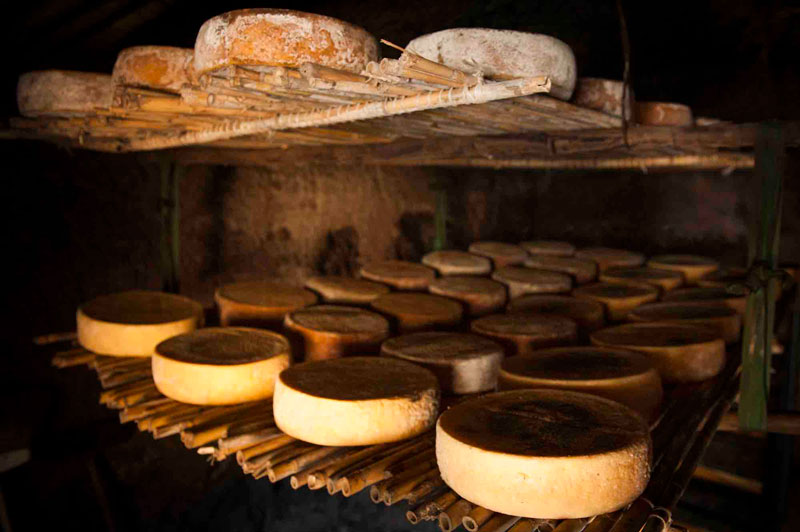
Cheeses of Gran Canaria

Hiking in Gran Canaria: Follow the Water to Presa de las Niñas

Roque Nublo may be one of the most famous places for hiking in Gran Canaria, but our walk takes us towards a greener, more humid corner of the southern highlands: Presa de las Niñas.

Surrounded by Canarian pine forest, the reservoir feels almost unexpected. Water, pine trees and volcanic rock completely change the atmosphere, particularly after the wetter months.

The reservoir tells another island story: where water has always been precious, dams transformed how it could be stored for agriculture and communities.

And among these pines is one of the characters of our walk: Casandra.

The Pino de Casandra, an enormous old Canarian pine, has watched over this landscape for generations. Stop beneath it. The Canarian pine is remarkably adapted to this volcanic island and capable of regenerating after fire — one reason these forests remain such an extraordinary part of Gran Canaria’s highlands.

Presa de las Niñas is also a popular local meeting place, with picnic tables, barbecues, toilets and a camping area — a favourite for families and friends spending the day together. Camping requires prior authorisation and fire restrictions must be checked.

Different hiking trails start in and around this landscape, so choose one that suits your time and ability. The official Tejeda trail network offers further routes and maps.

You don’t need a famous summit for every great walk.

Sometimes one of the best things to do in Gran Canaria is simply to follow the water and walk beneath the pines.

Official Tejeda hiking trails and routes — Tejeda official website
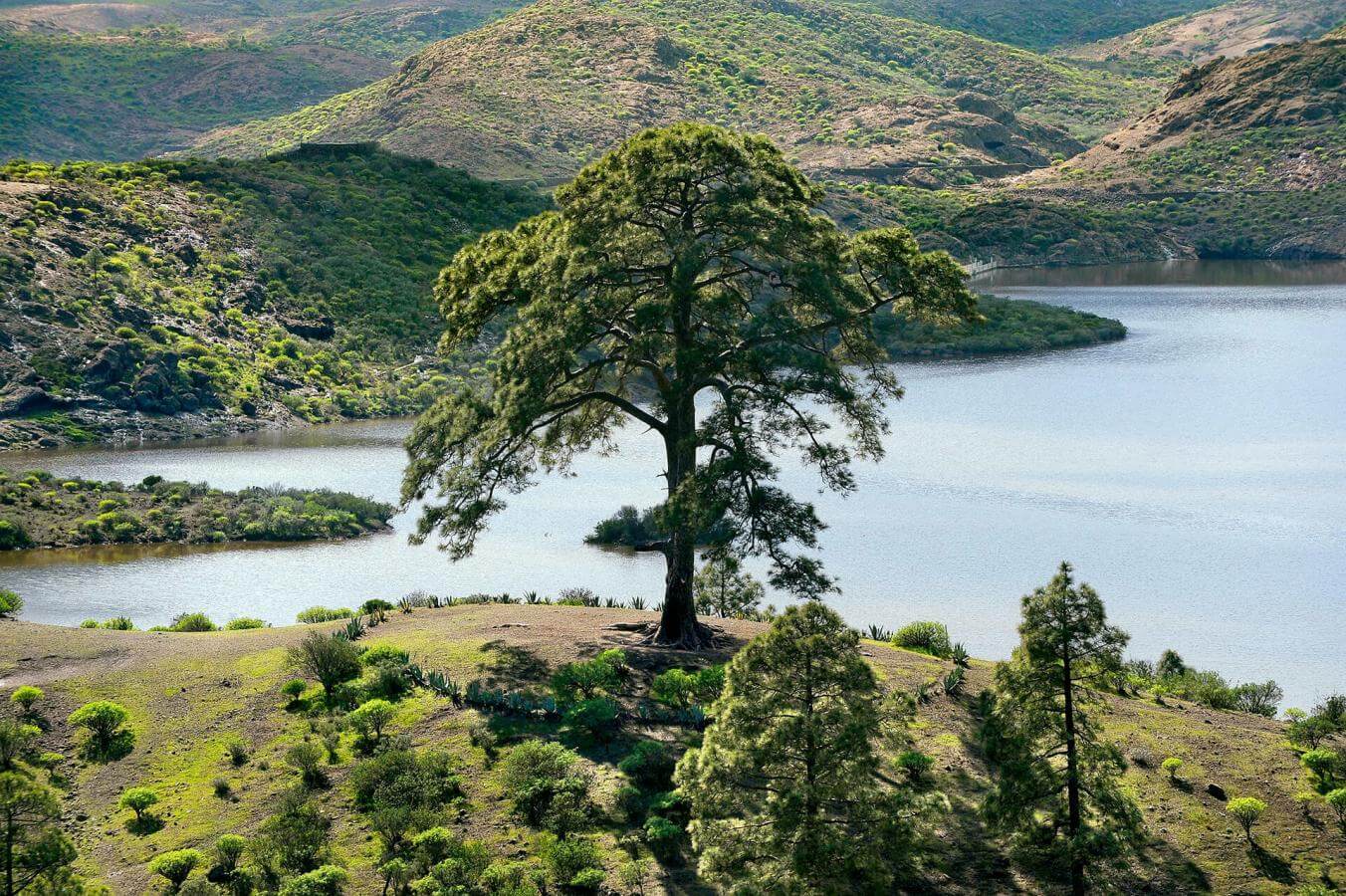
Hiking in Gran Canaria

Cruz de Tejeda: Where Paths, Landscape and a Vision of Gran Canaria Meet

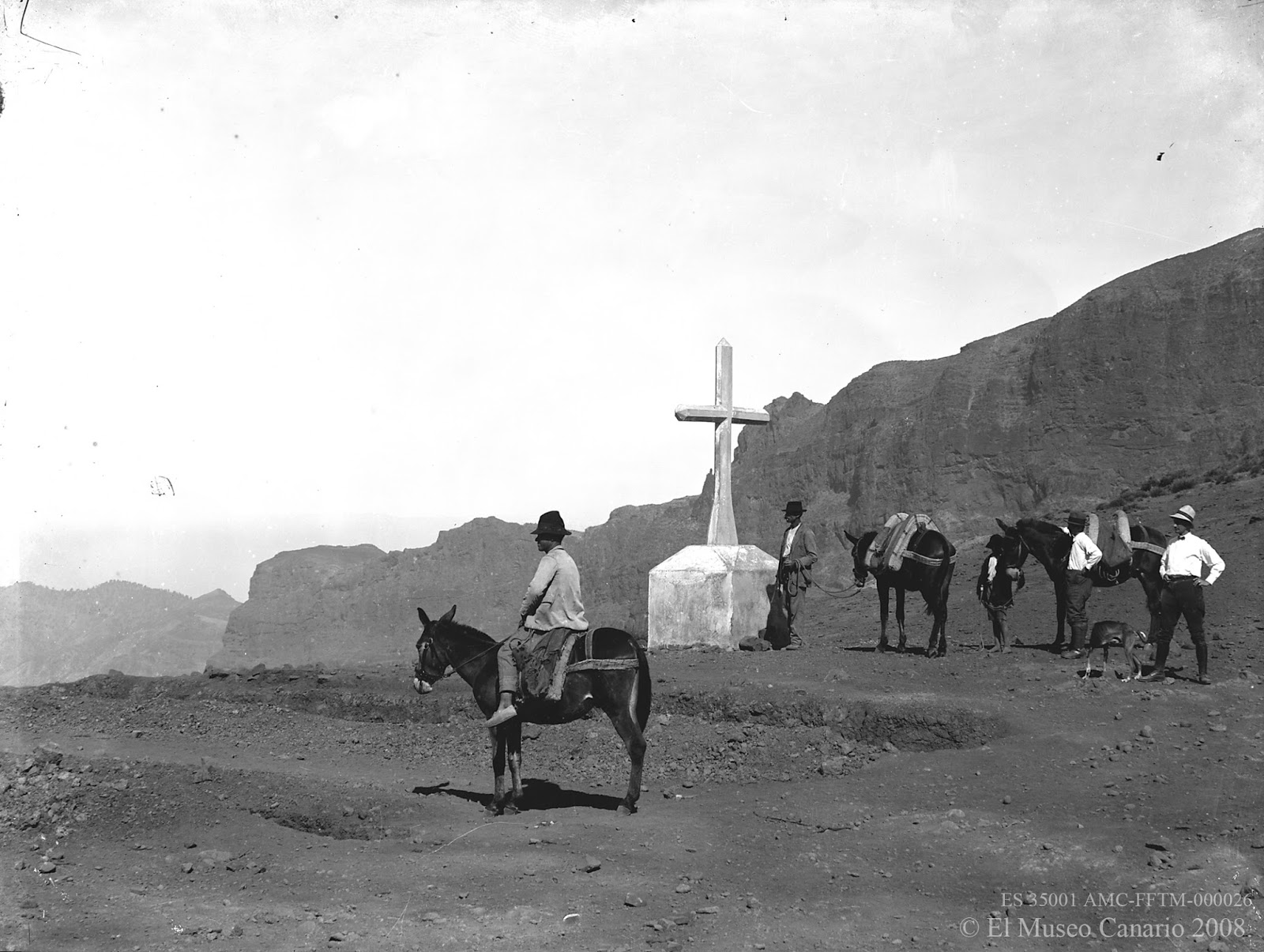
Long before there was a Parador or a traveller stopping here for the views, people were already meeting at Cruz de Tejeda.

At almost 1,600 metres, old mountain paths converged here before descending towards different sides of Gran Canaria. People and livestock crossed them, carrying goods and connecting mountain communities.

The large stone Cruz de Tejeda — Cross of Tejeda — still stands opposite the Parador. Around it, the little market stalls preserve something of that old sense of arrival and exchange: a place to stop, talk, eat and take something from the mountains home with you.

Now that you know about shepherds, transhumance and quesos de cumbre — highland cheeses — this is a particularly good place to look for one.

The way we travel has changed. The reason for meeting here somehow survived.

But something else happens at Cruz de Tejeda.

The island changes sides.

As you cross towards Tejeda, you move onto the southern face of the mountains. Behind you, the trade winds push their great sea of clouds against the northern slopes. Ahead, the landscape opens towards the immense Caldera de Tejeda. In only a short distance, the light, vegetation, temperature and feeling of the landscape begin to change.

Standing at this threshold is the Parador de Cruz de Tejeda.

Walk inside.
Cruz de Tejeda Gran CAnaria

Almost a century ago, another Canarian looked at this landscape and understood the extraordinary value of what Gran Canaria already possessed. His name was Néstor Martín-Fernández de la Torre.

A modernist and symbolist painter, muralist, decorator and stage designer, Néstor became one of the defining figures of Canarian art. He is especially known for his great pictorial cycles Poema del Atlántico — Poem of the Atlantic — and Poema de la Tierra — Poem of the Earth.

After years abroad, Néstor returned permanently to Gran Canaria in 1934 with another way of seeing home. He imagined how the island could elevate its own landscape, architecture, vegetation, crafts and traditions.

He called this Tipismo — a creative reinterpretation of Canarian character, not simply to preserve the past but to give the island a recognisable identity for the future.

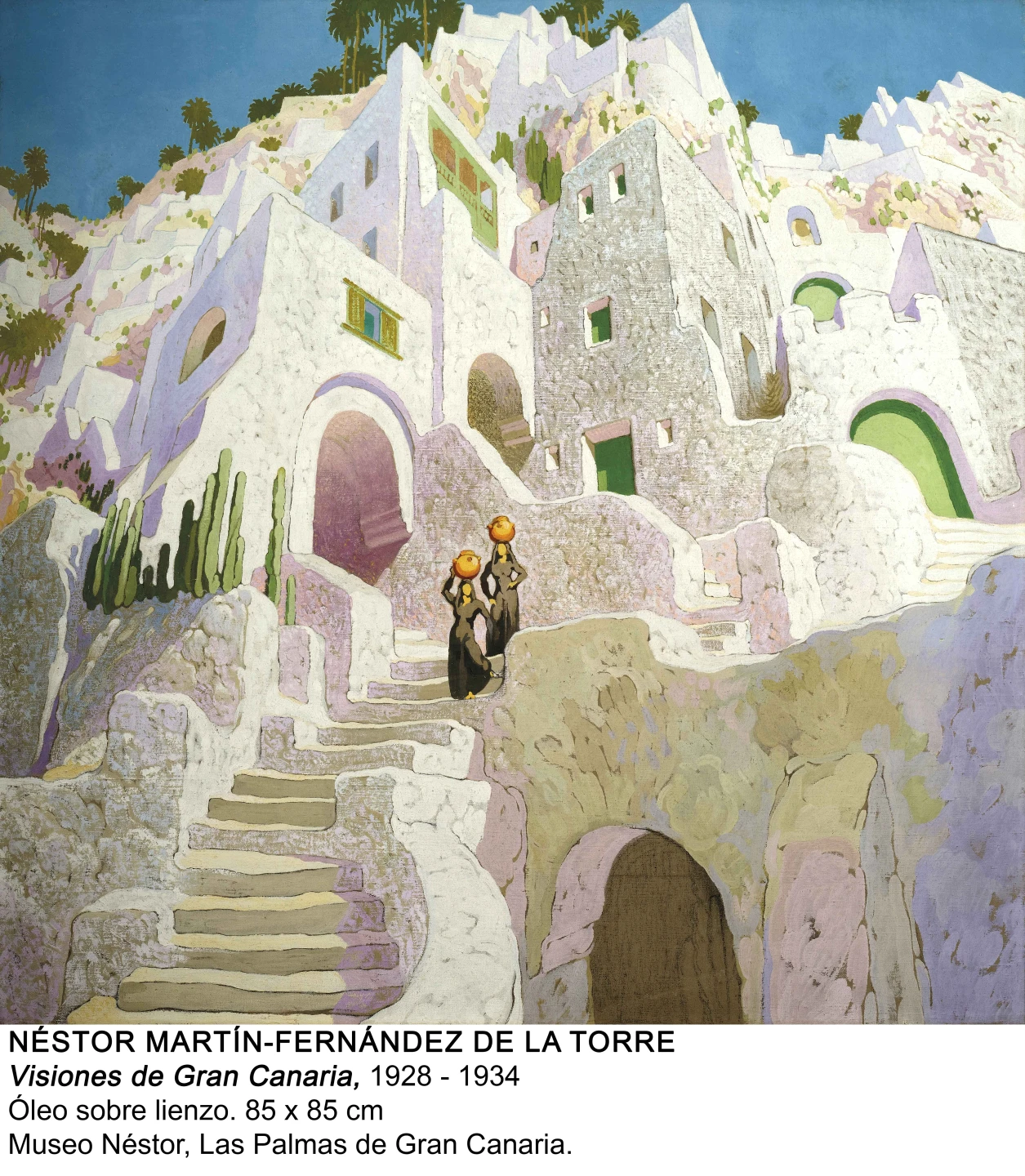
Between 1928 and 1934 he created Visiones de Gran Canaria — Visions of Gran Canaria: white villages climbing hillsides among Canarian vegetation and dramatic terrain, with echoes of the Greek islands. He used what he had seen elsewhere to reveal the potential of home.

And at Cruz de Tejeda, part of that vision became real.

His brother, architect Miguel Martín-Fernández de la Torre, was commissioned to redesign the original mountain lodge project with a distinctly Canarian character. Néstor contributed to its conception and interiors.

The building has evolved and parts were damaged by the 2017 wildfire, but traces of that vision remain.

Find the lounge. Find Néstor’s fireplace. Then look outside.

The Caldera de Tejeda is there again, now framed by a building conceived to become part of the landscape rather than simply observe it.

That is why we like to think of the Parador differently.

Not simply as a hotel.

As an experience — and, in its own way, a living museum.

Then continue down towards the village. Behind you, the sea of clouds may still be cascading over the northern mountains. Ahead, southern light falls into the great volcanic caldera.

Same island. A completely different landscape.

And Tejeda is waiting below.
Visiones de Gran Canaria

Tejeda Village: Now It’s Time to Taste the Territory

By now, you have walked enough.

Now it is time to rest — and eat the territory.

Walk into old Tejeda: white houses cascading down the mountainside, narrow streets, little terraces and the enormous caldera beyond.

Here, almost at the end of our journey, something beautiful happens.

The old Tejeda and the new one meet.

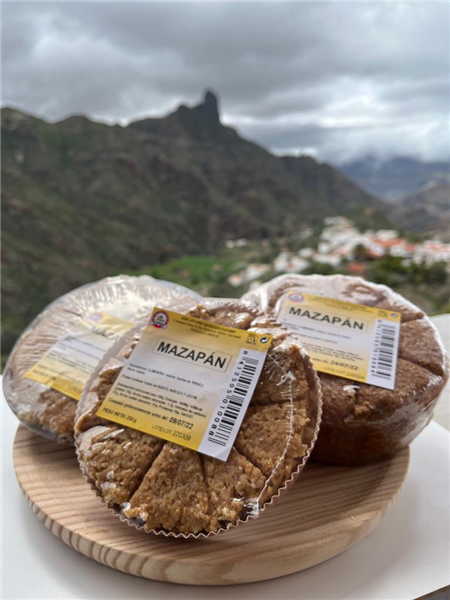
A few metres from the church of Nuestra Señora del Socorro — Our Lady of Perpetual Help — you will find Dulcería Nublo, but the story began before the shop existed.

Dolores Navarro and her sister used to make marzipan and bienmesabe at home and sell their sweets after Sunday Mass, beneath a tree beside the church.

Bienmesabe — literally “it tastes good to me” — is a traditional Canarian almond cream made with ground almonds, sugar and egg yolk.

So before going inside the pastry shop, look towards the church. That little piece of the village is part of the story you are about to taste.

In 1946, Dolores and her husband founded Dulcería Nublo, turning a domestic tradition into a Tejeda institution. Almonds meant food, income and recipes prepared at home; even their shells were traditionally used with firewood in the bakery’s oven.

The famous almond trees of Tejeda stop being merely something beautiful to photograph.

For a moment, you can taste why they were here.

Then walk a few steps further and Tejeda changes generation.

At LaLexe, chef Borja Marrero interprets many of those same ideas — territory, livestock, agriculture and local flavours — through something completely contemporary: ice cream.

His gastronomic world begins in the landscape: milk from his own livestock, produce from his organic farms, Tejeda almonds, prickly pear and other island ingredients. One creation even used pinocha — Canarian pine needles — to smoke white chocolate with goat and sheep milk.

Think about that.

Earlier we walked beneath the Canarian pines. We followed the livestock. We talked about the almonds. We stood inside the Caldera de Tejeda.

And now someone has put those landscapes into an ice cream.

Borja has described a creation made with goat and sheep milk and bienmesabe — the traditional Canarian almond cream — as a flavour capable of transmitting the territory of the Caldera de Tejeda.

That is exactly why we have brought you here.

At Dulcería Nublo, a family tradition that began with two sisters making almond sweets at home beside the church. At LaLexe, a new generation asking a different question:

What can Tejeda taste like today?

Almost eighty years separate those two stories, yet you can walk between them in minutes.

One preserves a flavour.

The other interprets it.

And both lead back to exactly the same place: the land.
Dulcería el Nublo Tejeda

Experience Tejeda with Us

Would you like to experience Tejeda beyond the postcard?

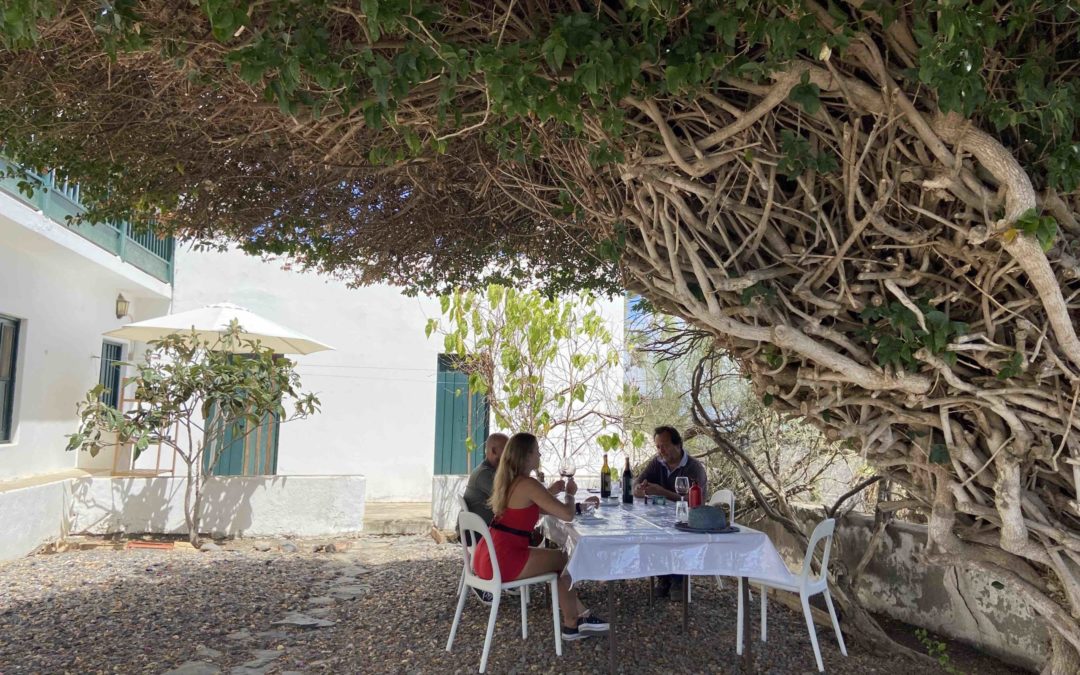
At Handmade Tours, we organise private tours to Tejeda, combining the extraordinary landscapes and stories of the mountains with a visit to a traditional cave winery and lunch in the village of Tejeda.

A private journey through landscape, wine, gastronomy and the people who make this part of Gran Canaria so special.
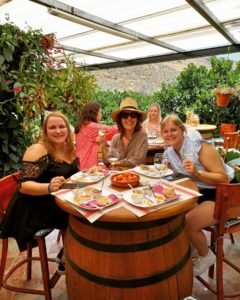
Discover Tejeda with us ⇒

what to expect at a wine tasting in gran canaria

what to expect at a wine tasting in gran canaria

What to expect at a wine tasting in Gran Canaria

Discover the Island Through Its amazing volcanic Wines

When you think of Gran Canaria, your mind might go straight to sun-drenched beaches, volcanic landscapes, and the vibrant life of Las Palmas. But hidden among its valleys and hills is another treasure: a centuries-old winemaking tradition that’s slowly becoming one of the island’s best-kept secrets. Welcome to the world of wine tourism in Gran Canaria—a journey through flavor, heritage, and breathtaking scenery.

Gran Canaria, a land of contrasts and unique terroir

Gran Canaria is often referred to as a “miniature continent” due to its diverse microclimates and landscapes. From arid coastal plains to lush mountainous regions, this geographical diversity creates ideal conditions for growing a wide variety of grape types. Vineyards here can be found nestled on steep volcanic slopes, where the altitude and mineral-rich soil give the wines a distinct character.

Despite being a small island, Gran Canaria’s terroir is anything but uniform. Wine lovers will find everything from dry, crisp whites to bold reds, and even sweet wines reminiscent of sherry. The island’s volcanic soil imparts a notable minerality, while the Atlantic breeze provides freshness to the grapes. These natural factors make the wines of Gran Canaria not only unique, but also a fascinating study for any wine enthusiast.

gran canaria wine guide ebook

A Winemaking Tradition Rooted in History

Viticulture in the Canary Islands dates back to the 15th century, brought by Spanish settlers. Gran Canaria was once a major exporter of Malvasía wines—sweet, rich wines highly coveted by European royalty and even mentioned in the works of Shakespeare. However, like in many parts of the world, phylloxera, economic shifts, and changing tastes caused the industry to shrink during the 19th and 20th centuries.

Thankfully, in recent decades, local producers have revived traditional winemaking techniques, while also embracing modern practices bledding together with traditional processes to obtain the best of local varieties. Today, Gran Canaria boasts a vibrant and growing wine scene, complete with a Denominación de Origen (DO) “Origen protected designation—“D.O. Gran Canaria”—which protects and promotes the quality and authenticity of its grapes and wines.

What Makes Gran Canaria Wines Special?

The combination of altitude, volcanic soil, ocean breeze, and ancient grape varieties makes Gran Canaria’s wines incredibly distinctive. Some of the most notable native and adapted grape varieties include:

  • Listán Negro: A red variety that produces fresh, fruity wines with soft tannins.
  • Tintilla: Known for deeper reds with good structure and aging potential.
  • Listán Blanco (also known as Palomino): Often used for crisp, aromatic whites.
  • Malvasía Volcánica: A key variety for sweet wines, offering floral and tropical notes.
  • Albillo Criollo: Produces full-bodied whites with a creamy texture.

The island’s vines are ungrafted and centuries-old, as the phylloxera plague never reached the Canary Islands. This gives the wines a unique historical lineage and purity that’s increasingly rare in the wine world. It’s a fantastic way to taste earthy grapes and understand the unique patrimony philloxera free land has vanished from grafted vineyards.

Wine tastings and Experiences in Gran Canaria: Where to Go

Wine tourism in Gran Canaria offers more than just tastings—it’s a full cultural and sensory experience. Many wineries are family-run, and visits often feel like stepping into someone’s home. Here are some must-visit wine areas and bodegas:

1. Santa Brígida and Monte Lentiscal

Just 20 minutes from Las Palmas, this area is considered the heart of Gran Canaria’s wine country. Home to the Casa del Vino, a wine museum and tasting center, Santa Brígida is surrounded by vineyards and volcanic landscapes. It’s a great starting point for any wine tour.

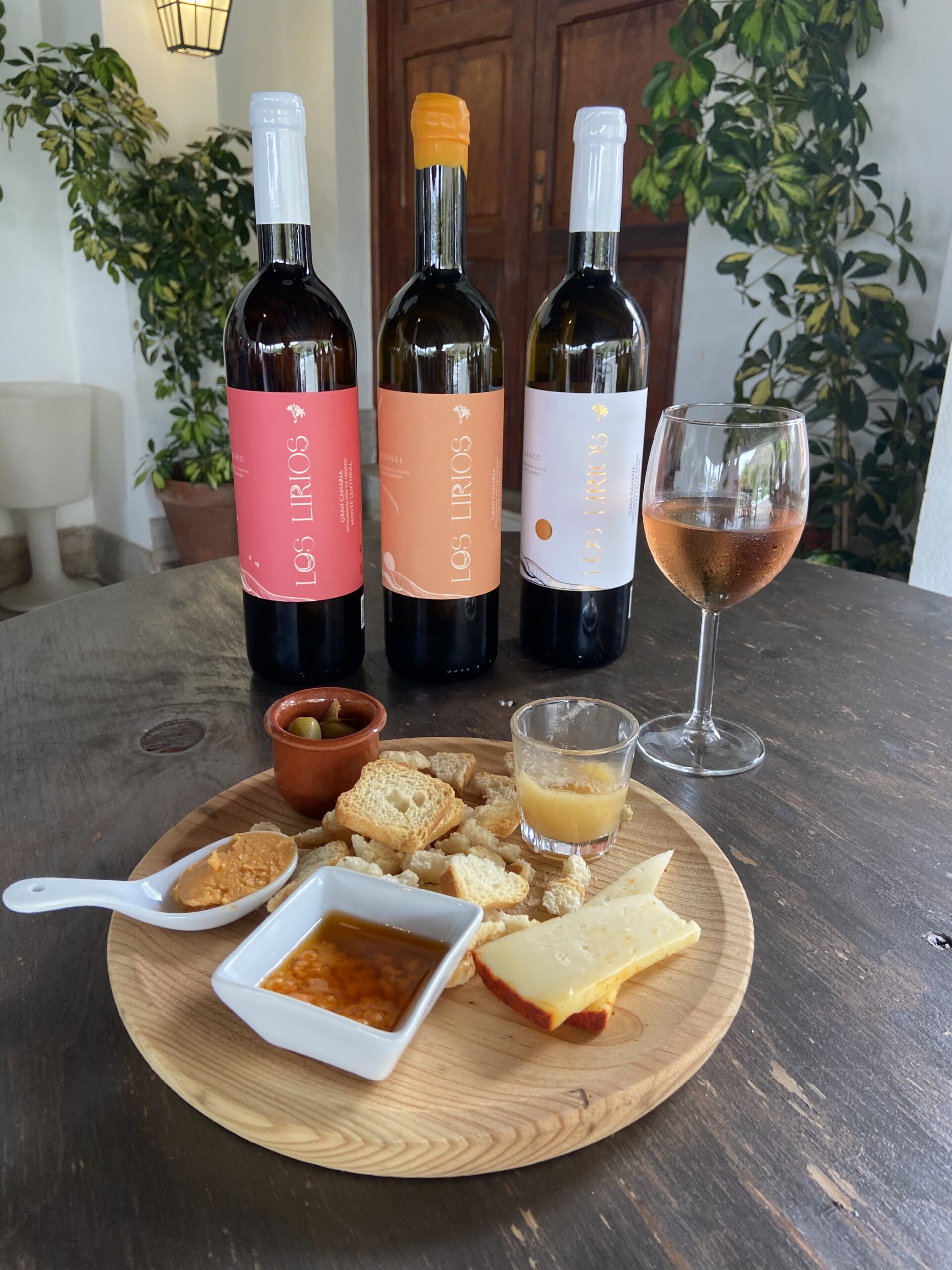
  • Bodega Los Lirios – Nestled at the bottom side of the Bandama Caldera, this winery produces fresh young reds and whites using traditional methods. The views alone are worth the visit.

2. San Mateo 

Located in the mountainous center of the island, this area features vineyards growing at altitudes above 1,000 meters. The cool temperatures and high sun exposure result in complex, aromatic wines.

  • Bodega La Montaña – Located near San Mateo city center, this winery combines altitude with cutting-edge winemaking. It is a 360º vineyards on top of a mountain, taking advantage of different latitudes and climate conditions on their vines. Whites amazingly floral, fruities and smoky fruity reds.

3. Telde

This stunning, and very little known municipality, covers from the coast all the way to the summit of Gran Canaria. From black sand beaches to huge calderas, orange plantations and of course heroic vineyards brushed by Los Alisios trade winds. 

  • Bodega La Higuera Mayor: Small family vineyards of red wines, neighbor of Bandama natural monument with views of the volcano and the ocean together with a sensational breeze that helps the vines aeration and impressing visitors and producing exceptional wines. 

4. San Bartolomé de Tirajanas

These eastern municipalities are where the winery is located, however Bodeda Las Tirajanas owns vineyards all over the islands. Some of their wines comes from exclusive vineyards by altitude and soils. 

Top Bodega:Bodega Las Tirajanas – A cooperative business and the largest winery and winemaking in Gran Canaria. Their wine tourism program includes tours, tastings, events and stunning views. Do not miss their vineyards wines.

What to Expect from a Wine Tour in Gran Canaria

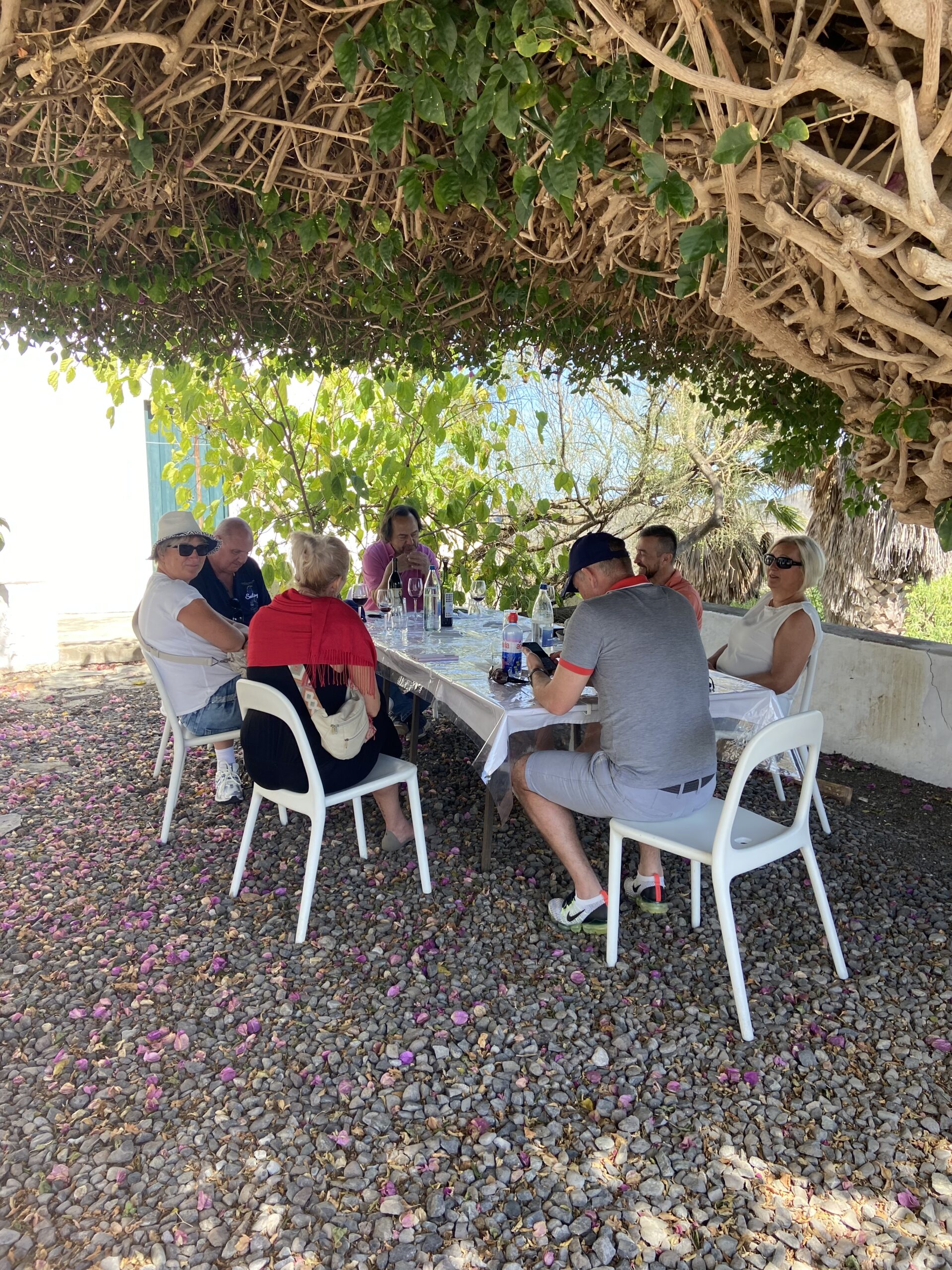
Wine tourism here is informal, personal, and often includes:

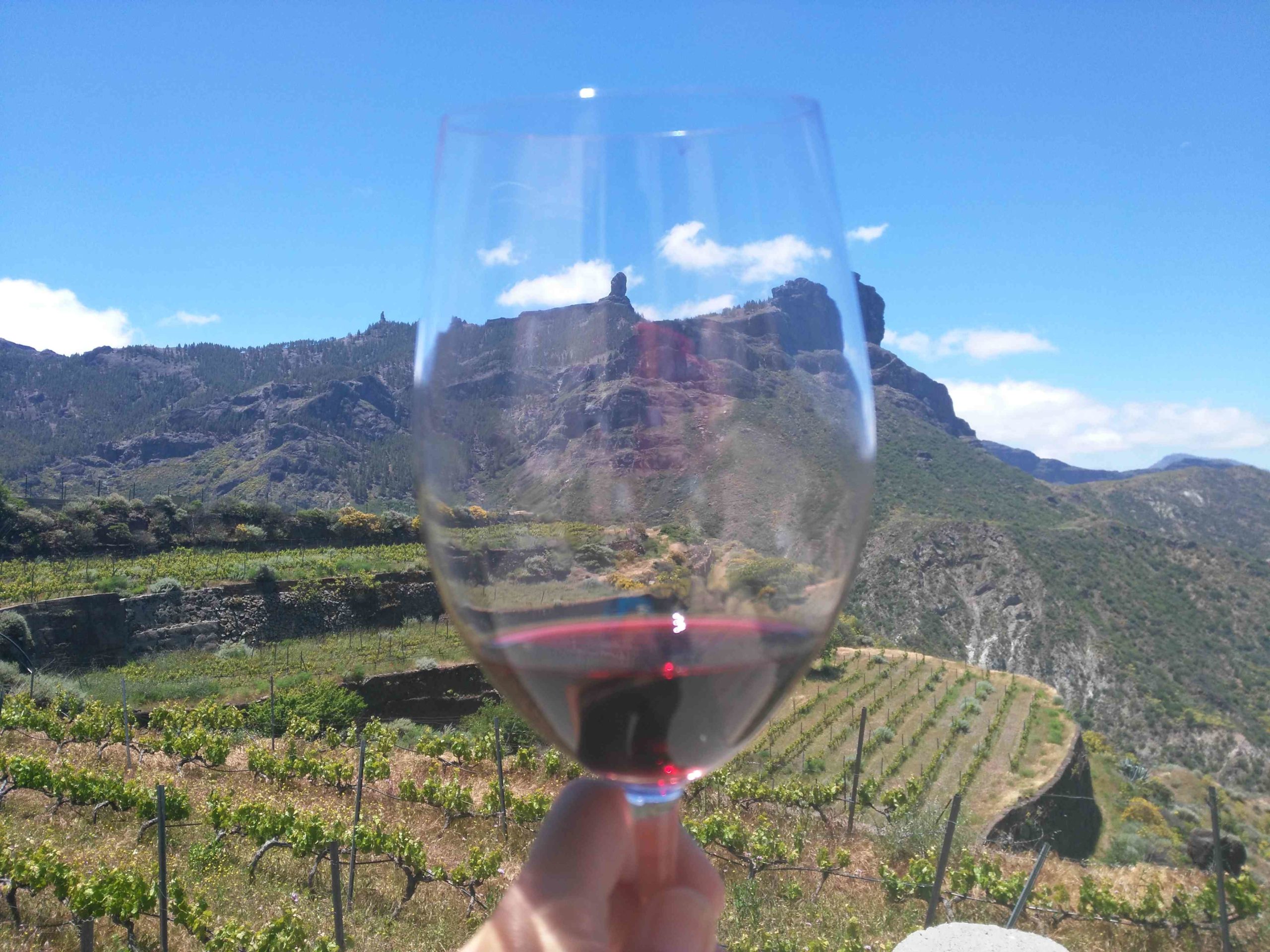
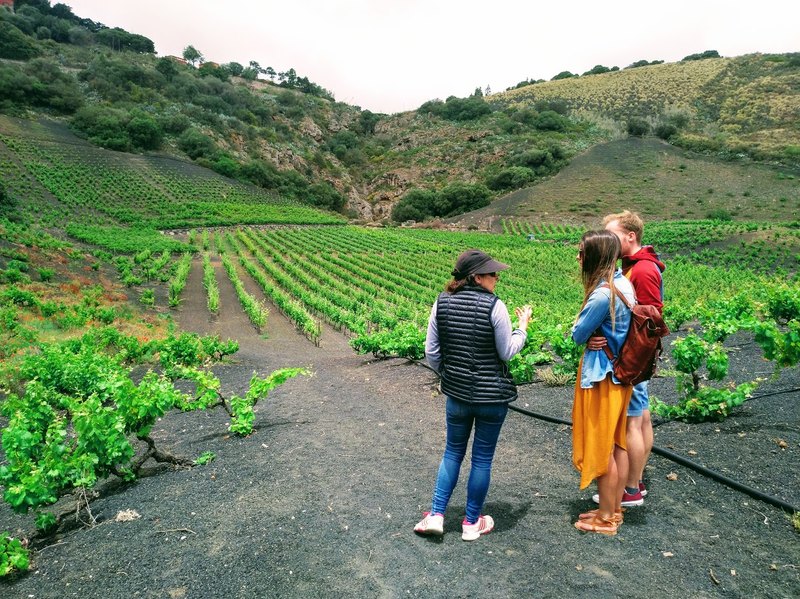
  • Guided walks through vineyards (often on terraced volcanic slopes).
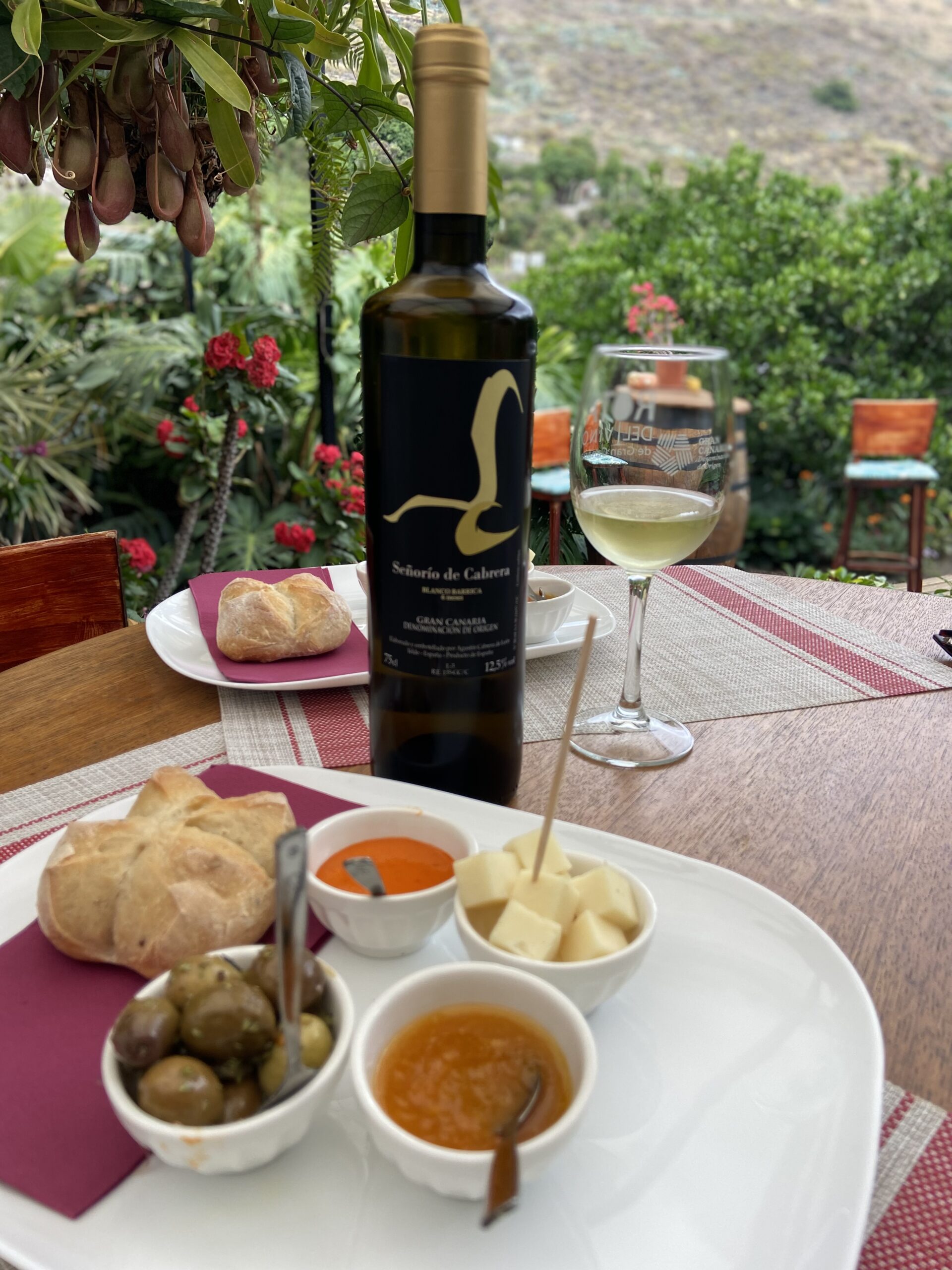
  • Tastings of 2–6 wines, paired with local cheeses or local products.
  • Meet-the-winemaker experiences: Where else in the world can you talk with the producer? 
  • Traditional Canarian food at winery restaurants or cave houses.
  • Cultural and natural highlights, like views of ancient calderas, caves, and archaeological sites or pine forest at the edge of a cliff with amazing views of Tenerife. Only with Handmade Tours

Be sure to book in advance, as many are family-run and operate on a limited schedule.

Pairing Wine with Island Culture

Gran Canaria’s wine tourism isn’t just about the wine—it’s about experiencing the soul of the island. After your bodega visits, make time to explore:

  • Traditional villages like Santa Lucía de Tirajanas, Tunte or Artenara.
  • Gastronomic markets (Mercado de Santa Brígida is small and full of amazing local products where a wide range of local wines and artisan cheeses of the islands are only the tip of our gastronomy iceberg.
  • Canarian cuisine, such as papas arrugadas with mojo, local cheeses, and ropa vieja de pulpo (mixed of vegetables, chickpeas and octopus), one of our favourite.
  • Historical sites, Maipes de Agaete aboriginal cemetery, Cueva Pintada Gáldar or Cañada de los gastos en Mogán.

Wine here is not just a drink—it’s a story, a culture, and a way of life.

Wine Tour Experience Gran Canaria: Bottle Your Own Wine

Wine Tour Experience Gran Canaria: Bottle Your Own Wine

gran canaria wine tasting

When Bottling Is Part of Your Wine Tour Experience

A Moment You Don’t Expect… But Never Forget

There is something deeply special about wine tourism that goes far beyond tasting a glass of wine.

It’s not just about aromas, flavours, or learning how to swirl your glass properly. It’s about connection. Connection with the land, with tradition, and most importantly, with the people behind the wine.

And sometimes, if you are lucky enough to experience wine tourism in Gran Canaria the right way, that connection becomes something even more personal.

You don’t just taste the wine.

You become part of its story.

Meeting the Winemaker: The Heart of the Experience

gran canaria winemakers

In large, commercial wineries around the world, visits can feel structured, distant, and sometimes even impersonal. You follow a guide, you listen, you taste, and you leave.

But in Gran Canaria, things are different.

Here, wine is still deeply rooted in small-scale, family-run wineries. Places where production is limited, traditions are preserved, and the people behind the wine are still present in every step of the process.

That means one very important thing:

You are very likely to meet the winemaker.

And not just for a quick hello.

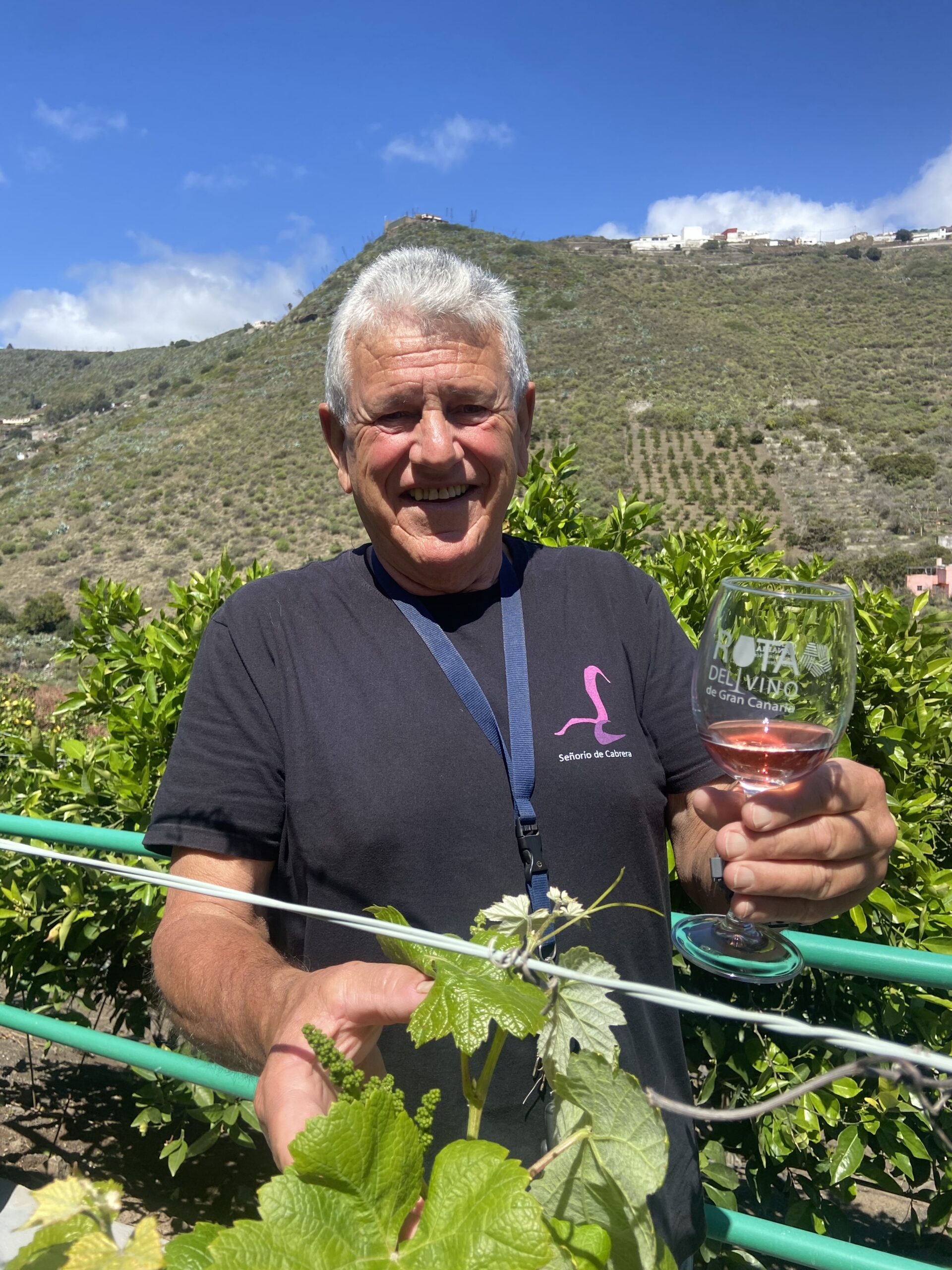
You walk with them through the vineyards. You listen to their stories. You understand their challenges, their passion, and their dedication to a land that is as demanding as it is beautiful.

For me, and for many travellers who come to the island, this is the true essence of wine tourism.

Meeting the producer is not an extra.

It is the experience.

The Spirit of the Canary Islands

To understand why these experiences feel so genuine, you have to understand the people of the Canary Islands.

For centuries, these islands lived in relative isolation from mainland Spain. Life here depended on resilience, community, and a deep connection with the land and the sea.

Visitors were rare. News from outside arrived slowly. And when someone came to the island, they were welcomed with curiosity, generosity, and warmth.

That spirit has never disappeared.

Even today, Canarians are known for their openness, their friendliness, and their natural way of making people feel at home. It is not something created for tourism.

It is simply who we are.

Add to that the influence of the climate — mild temperatures, endless sunlight, and an outdoor way of life — and you begin to understand why interactions here feel relaxed, authentic, and unforced.

From Vineyard to Bottle: Becoming Part of the Process

Now, imagine bringing all of that into a winery.

You arrive, not as a client, but as a guest.

You walk through vineyards shaped by volcanic soils and extreme conditions. You hear stories of harvests, of difficult years, of small victories that mean everything.

And then, something unexpected happens.

You are invited to participate.

Depending on the moment and the winery, you might find yourself helping in small, meaningful ways. One of the most memorable is being part of the bottling process.

Filling a bottle. Corking it. Holding in your hands something that, just moments ago, was part of a much larger story.

It may seem like a small gesture.

But it changes everything.

Because suddenly, the wine is no longer just something you taste.

It is something you experienced.

private wine tours in gran canaria
gran canaria private tours

A Different Kind of Luxury

meet winemakers in gran canaria

Luxury is often associated with exclusivity, design, or high-end services.

But in places like Gran Canaria, luxury takes on a different meaning.

It is the luxury of time.
The luxury of authenticity.
The luxury of being welcomed into someone’s world without filters.

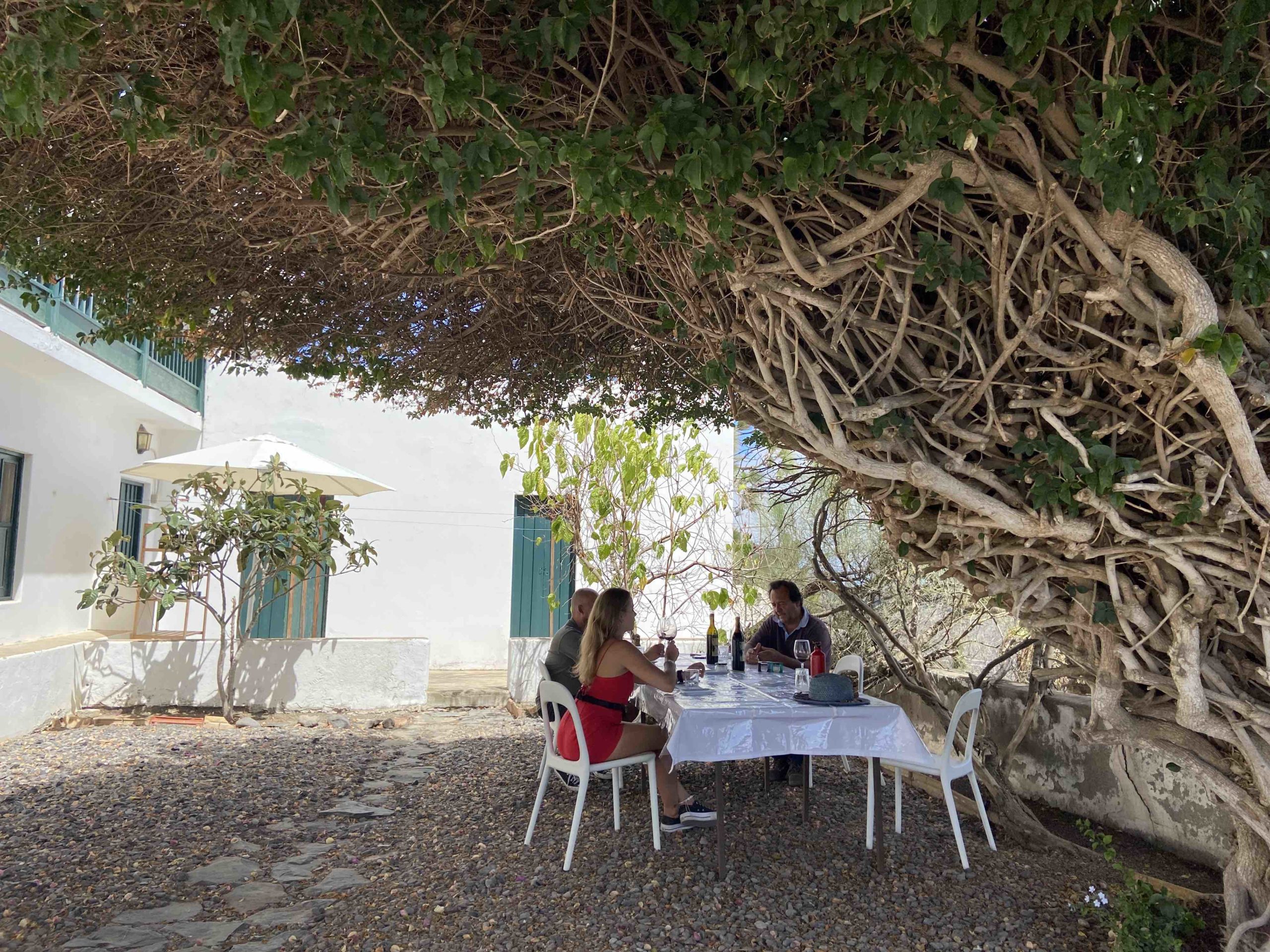
Sitting in a vineyard, sharing a glass of wine with the person who made it, talking about life, weather, harvest, and traditions — this is something you cannot replicate in a standard tour.

It is quiet. It is simple. And it is deeply meaningful.

For many visitors, this becomes the highlight of their trip.

Stories, Traditions, and Human Connection

Winemakers in Gran Canaria are not just producers.

They are storytellers.

They carry generations of knowledge, often passed down through families who have worked the land for decades. They know every corner of their vineyards, every change in the climate, every nuance that makes their wines unique.

And they are proud of it.

Not in a distant or formal way, but in a humble, generous way. They want to share what they do. They want you to understand it, to feel it, and to enjoy it.

That is why conversations flow easily.

A simple visit turns into a walk among the vines, a story about the past, a laugh, a shared moment.

There is no script.

And that is exactly what makes it special.

Wine Tourism in Gran Canaria: More Than a Tasting

If you are looking for things to do in Gran Canaria, wine tourism offers something that goes far beyond the typical experience.

Yes, you will taste great wines.

Yes, you will discover unique grape varieties and volcanic terroir.

But more importantly, you will experience something real.

You will step into a world where time moves differently. Where people still work with their hands. Where passion is visible in every detail.

And where a simple act, like bottling a wine, becomes a memory that stays with you long after your trip ends.

wine tasting in gran canaria

Gran Canaria is an island of contrasts.

From the coast to the mountains, from dry landscapes to lush valleys, every part of the island tells a different story. And those stories are reflected in its gastronomy.

Wine is just one piece of a much bigger picture.

Local cheeses, traditional dishes, seasonal products, and artisan creations all come together to create an experience that is deeply connected to the land.

When you explore wine tourism here, you are not just visiting a winery.

You are discovering the identity of the island.

Discover the Island Through Its Flavours

things to do in gran canaria

A Memory You Take Home With You

gran canaria wine experience

At the end of the day, you might leave with a bottle of wine.

But more importantly, you leave with something else.

A conversation.
A moment.
A connection.

And every time you open that bottle again, wherever you are in the world, you will remember where it came from.

Not just the place.

But the people.

Ready to Experience It Yourself?

If you are looking for a wine tasting in Gran Canaria, this type of experience offers a unique and personal connection with local winemakers. A different side of Gran Canaria, one that is authentic, personal, and deeply connected to local culture. Wine tourism is the perfect way to do it. 

And who knows…

You might even bottle your own wine.


MORE INFO ABOUT US

👉
wine tasting experience in Gran Canaria
→ https://www.handmadetours.es/pocket-wine-tasting-gran-canaria/

👉
free wine tourism guide for Gran Canaria
→ https://www.handmadetours.es/gran-canaria-wine-ebook-guide/

Gay-Friendly Wine Tourism in Gran Canaria | Local Experience

Gay-Friendly Wine Tourism in Gran Canaria | Local Experience

Wine tasting experience at a small family winery in Gran Canaria

Gay-Friendly Wine Tourism in Gran Canaria:

The Ultimate Local Experience Beyond the Beaches

Why Gran Canaria is More Than a Gay Paradise

Gran Canaria has earned its place as one of Europe’s most iconic LGBTQ+ destinations. From the vibrant energy of Maspalomas to internationally renowned events like Pride, the island is synonymous with freedom, diversity, and celebration.

But beyond the beach clubs, pool parties, and nightlife, there’s another side of Gran Canaria — one that many visitors never discover.

A quieter, more authentic experience rooted in nature, culture, and connection.

This is where wine tourism comes in.

Discover the Hidden Side of Gran Canaria

Volcanic landscape of Gran Canaria with mountains and natural scenery inland

When most people think about Gran Canaria, they imagine golden dunes, sunshine, and cocktails by the sea. And yes, that’s part of it.

But venture inland, and the island transforms dramatically.

You’ll find volcanic landscapes, deep ravines, mountain villages, and vineyards clinging to steep slopes shaped by centuries of tradition. This is a land of contrasts, where microclimates change within minutes and where altitude plays a defining role in the character of the wines.

Some vineyards sit at nearly 1,000 meters above sea level, making them among the highest in Europe.

Wine here is not industrial. It’s personal. It’s heroic.

Wine Tourism in Gran Canaria:

A Truly Authentic Experience

Unlike mainstream wine regions, Gran Canaria offers something rare: intimacy.

Wine tourism here is built around small, family-run wineries where the people who greet you are often the same people who planted the vines, harvested the grapes, and crafted the wine.

There are no crowds. No scripted tours.

Instead, you walk through the vineyards with the winemaker, hear their story, and taste wines that reflect the island’s volcanic soul.

You’ll discover local grape varieties that exist nowhere else in the world, shaped by unique conditions and a deep respect for tradition.

This is not just wine tasting — it’s connection.

LGBTQ+ Friendly by Nature, Not by Label

Gran Canaria is known for being LGBTQ+ friendly, but what makes the wine experiences truly special is how natural that inclusivity feels.

There’s no need for labels or performances.

The island’s wine community is warm, open, and genuinely welcoming. Whether you’re a couple, a group of friends, or traveling solo, you’ll feel comfortable, respected, and at ease.

It’s an environment where you can simply be yourself — while sharing meaningful moments around a glass of wine.

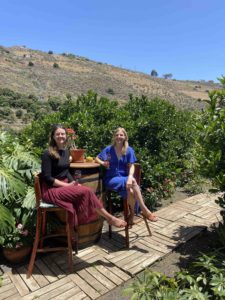
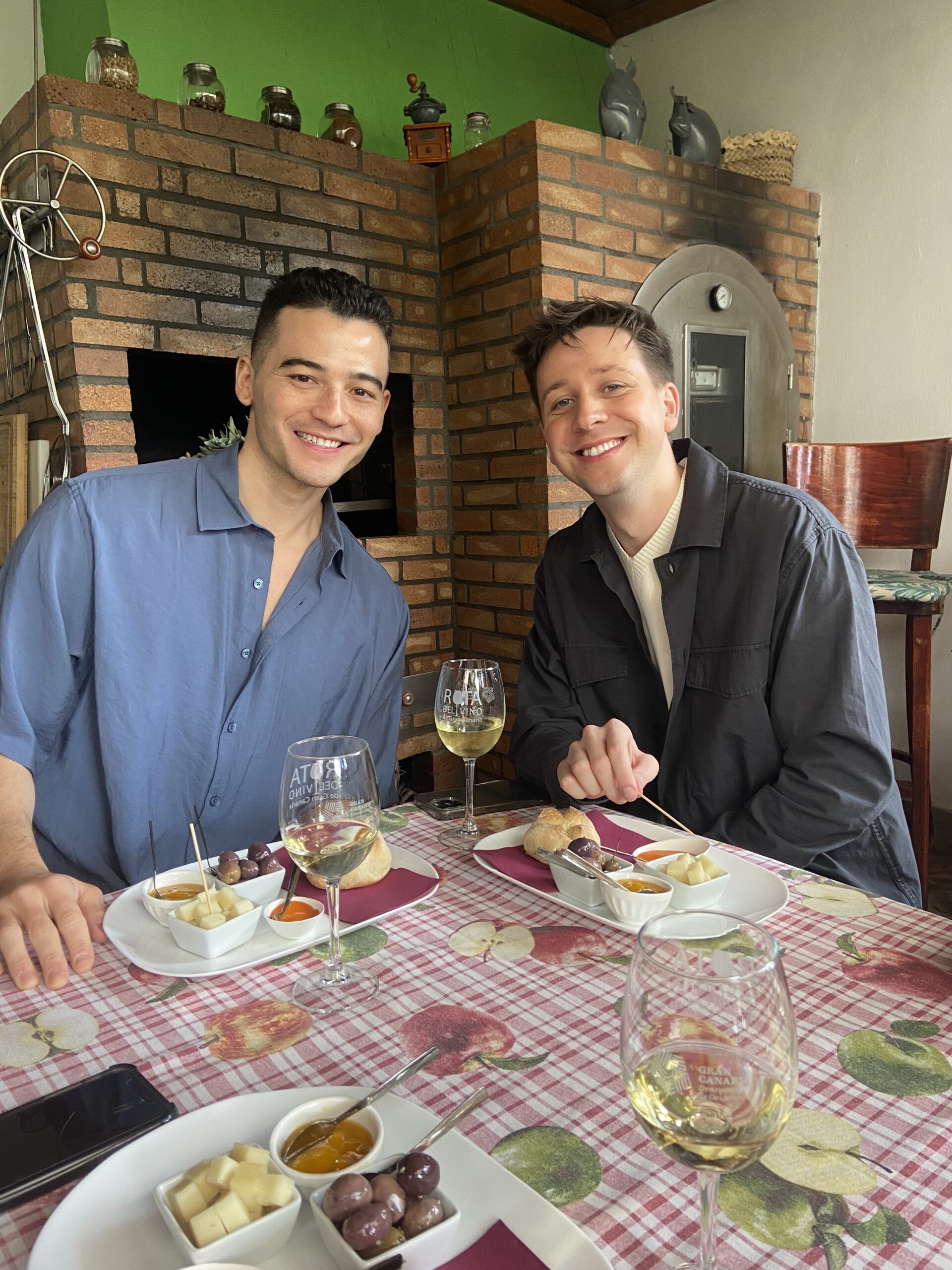
Happy LGBTQ+ couple enjoying a wine tasting experience in Gran Canaria

From Celebration to Connection: The Perfect Balance

LGBTQ+ enjoying a sunny day in a winery, Gran Canaria

One of the most unique aspects of visiting Gran Canaria is the balance it offers.

You can spend one day immersed in the vibrant energy of the LGBTQ+ scene — beach clubs, events, nightlife — and the next day completely disconnect in the island’s peaceful interior.

Wine tourism provides that contrast.

It slows things down. It invites you to reconnect — with nature, with people, and with yourself.

For many travelers, this becomes the most memorable part of their trip.

Things to Do in Gran Canaria Beyond Nightlife

If you’re looking to enrich your experience on the island, wine tourism is one of the most rewarding things to do in Gran Canaria.

Here’s why:

  • 🍇 Explore volcanic vineyards shaped by unique soils and microclimates
  • 🥂 Taste rare local wines you won’t find anywhere else
  • 🚶‍♂️ Walk through breathtaking landscapes far from tourist crowds
  • 🧑‍🌾 Meet local winemakers and hear their personal stories
  • 🍽️ Pair wines with local gastronomy in authentic settings

This is the side of Gran Canaria that many visitors miss — and the one that often leaves the deepest impression.

A Biosphere of Flavours and Landscapes

Gran Canaria is officially recognized as a UNESCO Biosphere Reserve, a reflection of its extraordinary natural diversity.

This diversity is mirrored in its wines.

From the north to the south, from the coast to the mountains, each area produces wines with distinct personalities. The volcanic soils, combined with trade winds and altitude, create conditions that are both challenging and exceptional.

This is what gives Gran Canaria wines their character — freshness, minerality, and a true sense of place.

wine tasting in gran canaria

Wine in Gran Canaria is deeply connected to its culture.

It tells stories of resilience, adaptation, and passion. Of families who have worked the land for generations. Of traditions that have survived against the odds.

When you visit a winery here, you’re not just tasting wine.

You’re stepping into a way of life.

More Than Wine:

A Cultural Experience

things to do in gran canaria

A Different Kind of Luxury

gay experience in gran canaria

Luxury in Gran Canaria doesn’t always mean five-star resorts.

Sometimes, it’s something far more meaningful:

  • A private tasting with a winemaker
  • A vineyard lunch surrounded by mountains
  • A quiet moment overlooking the Atlantic
  • A conversation that turns into a memory

This is the essence of handmade, authentic travel.

Despite its richness, wine tourism in Gran Canaria remains relatively undiscovered.

And that’s precisely what makes it so special.

There’s no mass tourism here. No overcrowded wineries.

Just real experiences, real people, and real stories.

For travelers seeking something beyond the obvious, this is where Gran Canaria truly shines.

Why Wine Tourism in Gran Canaria Is Still a Hidden Gem

lgtbq in gran canaria

Ready to Discover the Authentic Side of Gran Canaria?

If you are looking for a unique experience, wine tasting in Gran Canaria offers a welcoming and authentic atmosphere where diversity and local culture come together. Discover a different side of the island through a truly personal wine experience.

Authentic, intimate, and deeply connected to local culture.

Book your wine experience or get in touch to create a tailor-made journey designed just for you.

Gran Canaria: The Perfect Place To Blend Golf Tours and Wine Tours!

Gran Canaria: The Perfect Place To Blend Golf Tours and Wine Tours!

Gran Canaria: The Perfect Place To Blend Golf Tours and Wine Tours!

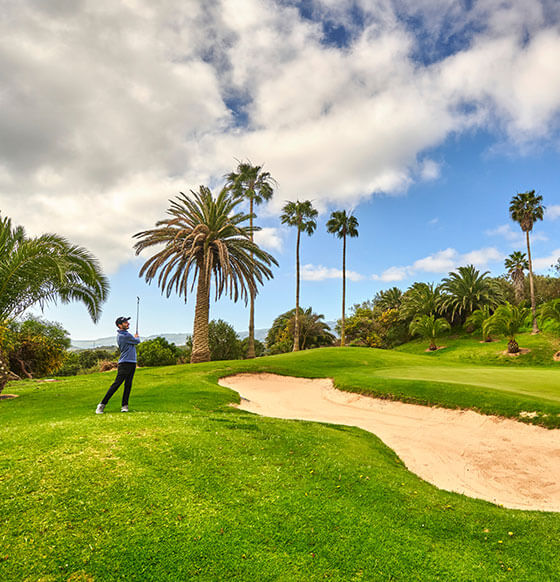
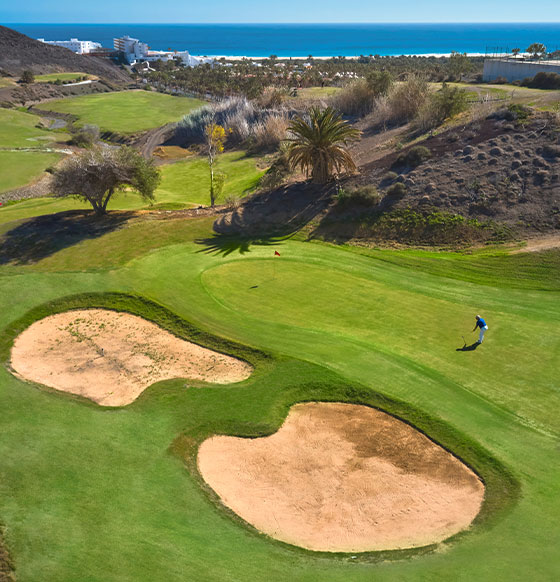
Are you looking for the perfect getaway? Gran Canaria is the jewel in the crown of the Canary Islands, blending beautiful landscapes with a huge variety of outdoor activities. Golf is one of the most popular activities for locals and tourists alike, thanks to the wonderful range of courses on the island, each offering a unique challenge to beginners and experienced golfers alike. 

In this latest blog, we thought we would explore some of the world-class courses available as well as some of the other fun things to do in Gran Canaria when you’re not treading the fairway! 

Exploring a golfer’s paradise

If you are a golfing fan, then Gran Canaria is a wonderful destination, no matter your skill level. The unique topography of the island, with its rolling hills and stunning coastline, makes for the perfect canvas for a golf course, with each club offering players a truly exclusive experience. 

There is a huge range of courses on offer, but some of our favorites include:

  1. Anfi Tauro

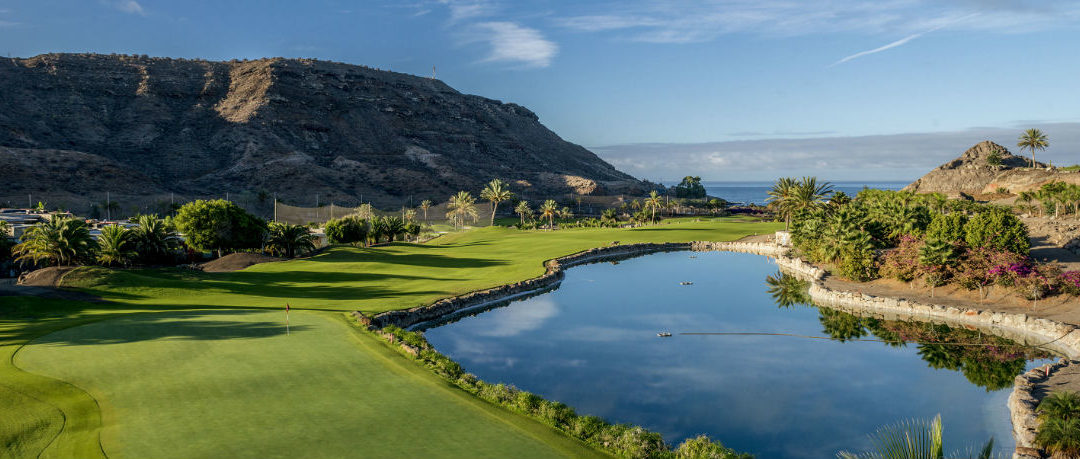
When it comes to Gran Canaria golf, the Anfi Tauro Golf and Luxury Resort is often one of the first to be named. Located in the heart of the island, this is a stunning course for those who love year-round golf and offers both a 9-hole and an 18-hole course. 

Designed by the renowned golf course architect Robert von Hague, Anfi Tauro is recognized as one of the world’s leaders, and it offers a truly picturesque landscape while playing. Both courses are surrounded by volcanic mountains and the Atlantic Ocean, ensuring a challenging and enjoyable round. 

2. Salobre

Another very popular option is the Salobre Golf and Resort complex. A fantastic choice for those looking for exciting outdoor activities in the southern part of the island, it offers two challenging 18-hole courses. 

The Old Course offers a desert-style layout, packed with cacti and unique plants while the New Course faces the Atlantic, providing breathtaking views on every hole. 

3. Real Club de Golf Las Palmas 

Founded back in 1891, the Real Club de Golf Las Palmas is the oldest golf clubs in the whole of Spain. Nestled within the Bandama Natural Monument, the course requires careful strokes to avoid the many plants and fauna that surround the narrow fairways.

The challenging terrain and the rich century make this a must-visit option for golf enthusiasts of all skill levels looking for challenging outdoor activities. 

4. Maspalomas 

Located in the southeast of the island, the Maspalomas course offers a unique Gran Canaria golf experience as golfers play around the sandy Maspalomas Dunes Nature Reserve. Offering spectacular views over the coastline, the Mackenzie Ross-designed course is a challenging but highly rewarding experience for players of all skill levels. 

The 18-hole course is flat and extensively laid out, but its long and broad fairways make for a wonderful day exploring this 73-par course. 

5. Meloneras 

Finally, no Gran Canara golf list would be complete without mentioning the magnificent Meloneras Golf Course. This challenging 18-hole Championship course is based in the south of the island and provides nine holes of spectacular mountain views and nine holes of stunning beach and ocean views. 

If all of that wasn’t enough, players will also work their way through lakes and trees, making it one of the best options for golfers looking to play a little of everything Gran Canaria has to offer. 

Things to do in Gran Canaria beyond the fairway 

Of course, Gran Canaria offers far more than just world-leading golf courses! There is a huge choice of outdoor activities and trips that you can enjoy on the days you’re not exploring the fairways. The island’s diverse landscape makes it an ideal spot for those looking to explore the many hiking trails that span the island, while those looking to hit the water can enjoy windsurfing, scuba diving, and more. 

Yet, one of the best Gran Canaria trips you can do is explore one of the many superb vineyards and wineries that call the island home. The island has a long history of winemaking that dates all the way back to the 15th century, and thanks to its unique climate and volcanic soil, the grapes grown here are fantastic for producing delicious wine. 

After some adventurous excursions exploring all of the outdoor activities that Gran Canaria has to offer, a visit to a vineyard is the ultimate way to relax and enjoy time with your loved ones or friends. Here at Handmade Tours, we proudly offer a wide range of private wine tours, taking care of everything for you so you can sit back and discover the unique taste and stunning views.

Each of these private tours are created bespoke to you, allowing you to discover the allure and charm of the island. We are experts in Gran Canaria wine tourism, and our friendly and knowledgeable team are here to create a truly unforgettable and unique trip around these captivating vineyards and wineries. 


Our mission is to provide our wonderful guests with a gastronomical delight, combining delicious food with some of the finest Gran Canaria wine available. Whether you are looking to combine fun outdoor activities with beautiful landscapes or relax after a busy day exploring one of the incredible golf courses the region has to offer, our private wine tours are created around your interests. We break away from the rigidity of conventional tours, ensuring you will never feel rushed or stuck to strict time schedules!  

We love this island and are dedicated to giving visitors the very bet experiences possible. That is why we are proud to work with the finest local producers, enjoying strong relationships that ensures you will enjoy a truly unforgettable moment. We believe in sustainable tourism, which is why on our private 

Gran Canaria wine tours, you will always be visiting producers using 100% local products. 

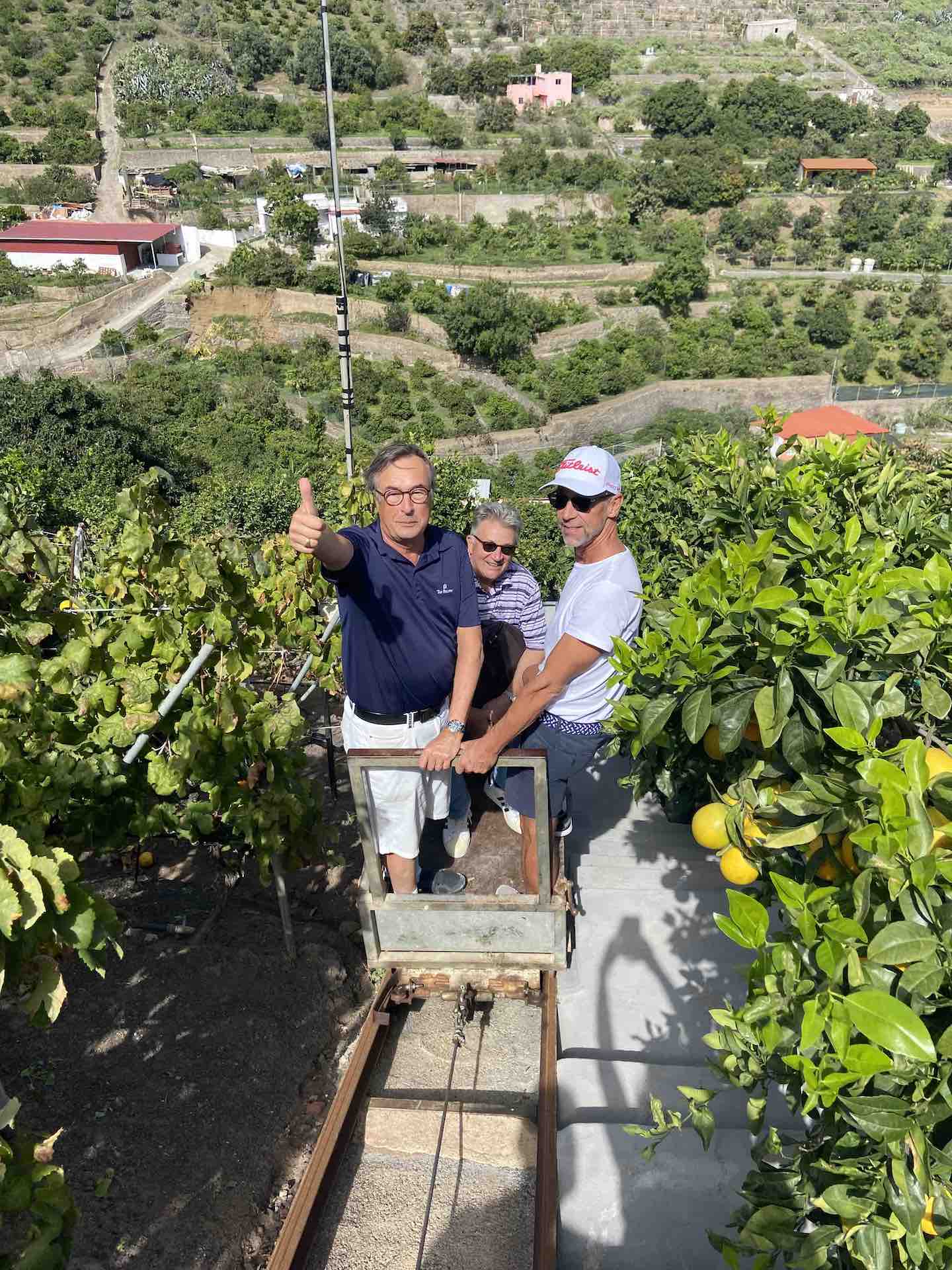
golf and wine tasting experience in Gran Canaria with scenic course and volcanic landscape

Start your adventure today!! 

After a day on the golf course, there’s nothing better than enjoying a wine tasting in Gran Canaria. Combine sport, relaxation and local flavours in a unique experience that connects you with the island beyond the fairways.

If you are looking for things to do in Gran Canaria and want to combine your next golfing adventure with a visit to one of the many incredible vineyards to discover some truly stunning wine and food, then our team is here to help you! 

We pride ourselves on delivering the very finest private wine tours in Gran Canaria, so get in touch today to find out more! 

Related Articles

Related

Wine Tasting Gran Canaria: Everything You Need To Know!

Wine Tasting Gran Canaria: Everything You Need To Know!

Wine Tasting Gran Canaria: Everything You Need To Know!

When it comes to things to do in Gran Canaria, wine tasting and food tours are some of the most popular outdoor activities you can do. Sipping and swirling your way through vineyards is the ultimate way to experience the beauty of this stunning location.

While wine tasting might not be the first thing that comes to mind when you think of the Canary Islands, the region is home to some truly fantastic hidden gems. From the rugged landscapes to the lush green vineyards, Gran Canaria offers a unique and unforgettable experience for wine enthusiasts.

This island also has a long and fascinating history of winemaking, dating back to the 15th century, and today, it’s home to some of the most impressive vineyards in Spain. So, get ready to explore this wine region, taste the unique flavours of the local wines, and get lost in the stunning vineyards of Gran Canaria.

Join us as we journey through the wineries and vineyards of this beautiful island and discover why they should be on the bucket list for anyone looking to travel to Gran Canaria.

The History of Winemaking in Gran Canaria

The history of Canary wine dates back to around the 15th century when Spanish conquerors introduced grapevines to the island. The unique climate, with its hot and dry summers and mild winters, combined with the volcanic soil, provided the perfect conditions for growing grapes, and Gran Canaria wine quickly became a popular export. These traditions have been passed down from generation to generation, and today, it’s still a vital part of Gran Canaria’s cultural heritage.

In the 19th century, Europe was hit by a phylloxera epidemic that devastated the vineyards, and it wasn’t until the 20th century that the industry began to recover. However, due to its amazing volcanic soil, the Canary Islands never suffered phylloxera, allowing the region to grow an abundance of varieties that disappeared from Europe during the epidemic. 

That’s why Gran Canaria grows ungrafted vines across the island’s nearly 11,000 hectares of vineyards, with the wines produced here being known for their unique flavour and character.

Vineyards of Gran Canaria

A trip to one of the many vineyards is a worthy excursion for those looking for outdoor activities and things to do in Gran Canaria. These vineyards are scattered throughout the island, from the rugged mountains to the coastal regions, but the most famous wine, the Monte Lentiscal, comes from the Northeast of the island. This region is where you’ll find some of the very best vineyards and wineries, thanks to the varieties of grapes grown here, including Listan Negro, Tintilla, and Listán Blanco.

In the south of the island, you’ll find the region of Santa Lucía, known for its stunning landscapes and unique wine production. The vineyards here are planted on steep slopes, and the grapes are grown using traditional methods without the use of chemicals or pesticides. This region of old basalt terroir is known for its white wines in altitude, which have a distinct aroma and flavour.

Wine Tasting Experiences in Gran Canaria

One thing is for sure: a wine tour in Gran Canaria is a unique and unforgettable experience. The island’s wineries and vineyards offer a variety of trips and tastings, allowing you to learn all about the winemaking process and taste some of the delicious local Canary wines. Most wineries require reservations in advance, so be sure to book your tour ahead of time.

One of the most popular wineries in Gran Canaria is Bodega Las Tirajanas, located at around 1,000m above sea level. Alongside tasting the fantastic Canary wine, we love a visit to this vineyard as it offers spectacular views over the whole of the island.

Food Pairings with Gran Canarian Wines

Of course, every wine enthusiast knows that good wine requires good food. Thanks to their unique flavors and aromas, Gran Canaria wines pair well with a wide variety of foods. One of the most popular dishes is the local goat cheese, which has a tangy flavor that complements the wine’s acidity. Another popular pairing is the traditional Canarian dish of papas arrugadas, which are small, salted potatoes served with a spicy mojo sauce.

If you’re looking for a more formal dining experience, many of the island’s wineries offer food pairing menus, where you can taste a range of wines paired with local dishes. These menus are a great way to experience the unique flavors of Gran Canarian cuisine and wine.

Gran Canaria is a hidden gem in the world of wine tourism, offering stunning landscapes, unique wines, and a rich history of winemaking. Whether you’re a seasoned wine enthusiast or a casual drinker, a trip to the island is an unforgettable experience. So, if you are looking for things to do in Gran Canaria, be sure to visit some of the island’s top wineries, try the local food pairings, and take in the beauty of the vineyards – just make sure you book your tour in advance!

gay life and wine tasting experience in Gran Canaria with scenic course and volcanic landscape

Ready to Discover a new Side of Gran Canaria?

If you are looking for a more personal experience, discover our wine tasting experience in Gran Canaria and meet local winemakers in a unique setting.

Want to explore more? Download your free Wine tourism guide for Gran Canaria and discover local vineyards, traditions and hidden gems.

Related Articles

Related

Book Now Book Now