
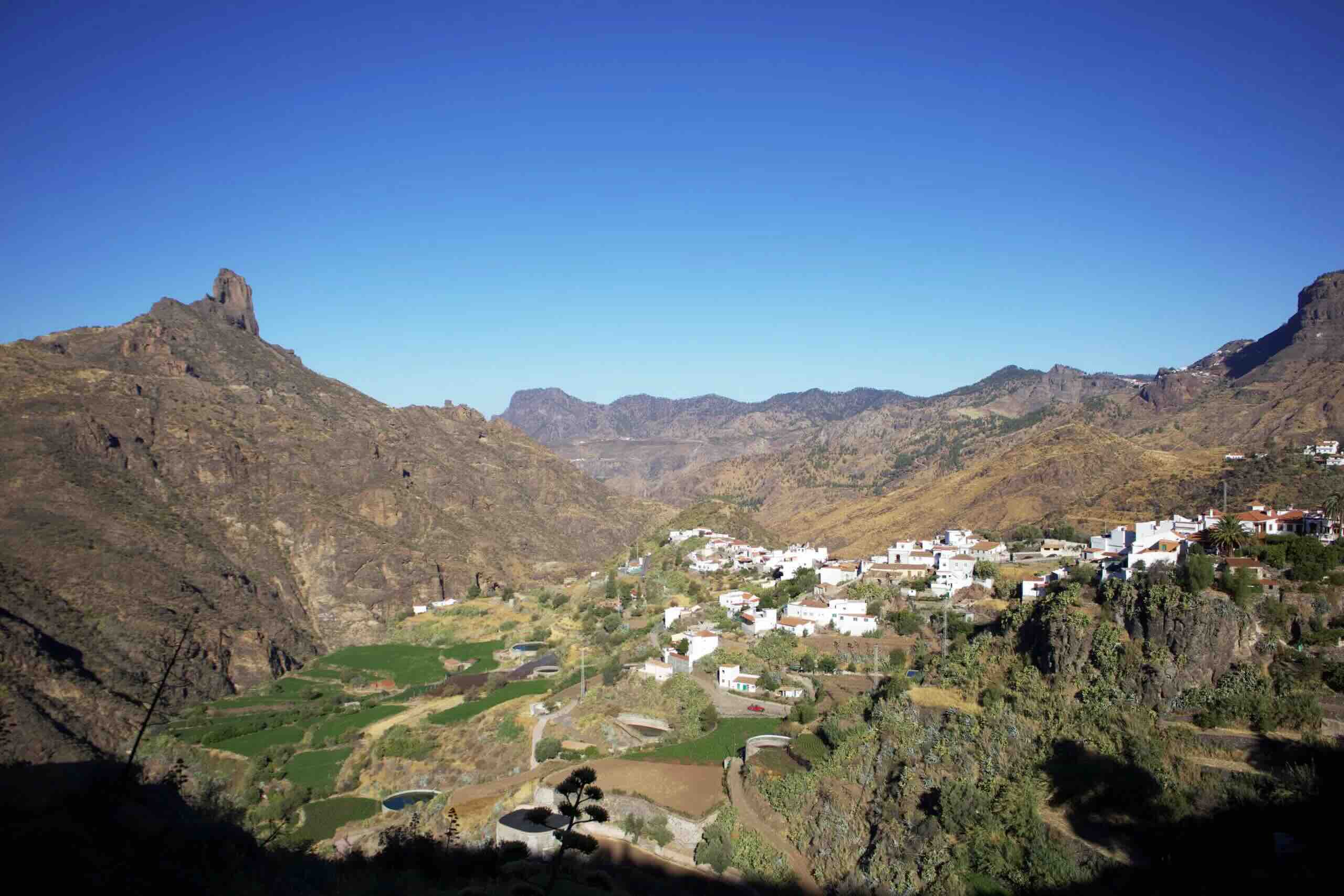
Tejeda, Gran Canaria: You Have Never Seen It Like This
The ancient forces that created the immense landscape you are admiring today
I’m going to show you how to look at Tejeda differently — our way.
There are already hundreds of articles telling you what to do in Tejeda: Roque Nublo, almond blossom, viewpoints and hiking. And rightly so — they are among the reasons Tejeda is one of Gran Canaria’s most admired places.
This article is different.
We are going to start long before Tejeda existed. Before its white houses and almond trees, before shepherds crossed these mountains and before the first inhabitants of Gran Canaria made some of these peaks sacred.
We are going to start with the land itself.
Because that immense landscape is the result of millions of years of volcanic activity, geological transformation and erosion — the territory where generations would later learn to live, cultivate and graze their animals.
And once you understand that landscape, Tejeda begins to change before your eyes.
So yes, we will talk about things to do in Tejeda, Gran Canaria. Just perhaps not the things you were expecting.
You already know the postcard. Now let us show you what you are actually looking at.
The Giant Caldera Behind the Tejeda Postcard
Before looking for what to do in Tejeda, stop for a moment and look at the landscape itself.
Those cliffs, ravines and rock formations are remains of one of the most dramatic chapters in Gran Canaria’s volcanic history.
Around 14 million years ago, major volcanic events culminated in the formation of the Caldera de Tejeda — the largest volcanic caldera on the island, approximately 20 kilometres across. Collapse and millions of years of erosion transformed it into the immense landscape we see today.
Erosion prevented the caldera from remaining a perfect volcanic bowl, carving ravines while leaving some of its hardest formations standing.
Among them are two silhouettes almost everyone visiting Gran Canaria recognises today: Roque Nublo and Roque Bentayga.
They are not decorations placed in the landscape. They are survivors of it.
You are standing inside the story that created it — and inside the largest volcanic caldera on the island.
From Roque Nublo to Roque Bentayga: The Sacred Mountains of Tejeda
You may have come to Tejeda with Roque Nublo already on your list — and it absolutely deserves to be there. Its silhouette is one of the great symbols of Gran Canaria.
But now that you know you are standing inside an ancient volcanic landscape, look around once more. Another extraordinary rock rises from the heart of the Caldera de Tejeda: Roque Bentayga.
Before approaching it, go inside first.
The Roque Bentayga Interpretation Centre gives you something no viewpoint can provide: context. Bentayga was not simply an impressive geological formation for the ancient Canarians. This was an inhabited landscape, with cave dwellings, collective granaries and defensive structures, but also a place with profound spiritual significance.
At the rock is an almogarén — a sacred ceremonial space — associated with the observation of the sky. Archaeological and archaeoastronomical research has revealed relationships between this place and the movements of the Sun and Moon.
The ancient Canarians cultivated the land and raised livestock, with an intimate knowledge of these mountains, pastures, water and pathways. Pine forests then occupied a much greater part of Gran Canaria’s highlands.
That knowledge of the land mattered. The Castilian conquest of Gran Canaria was not immediate: the campaign lasted around five years, and these central mountains formed part of the final resistance. Bentayga itself served as a fortified refuge.
You do not need the entire history of Gran Canaria to appreciate what happened here. Stand beneath Bentayga and understand that this landscape was once home, pantry, pasture, sanctuary and fortress at the same time.
Then look around.
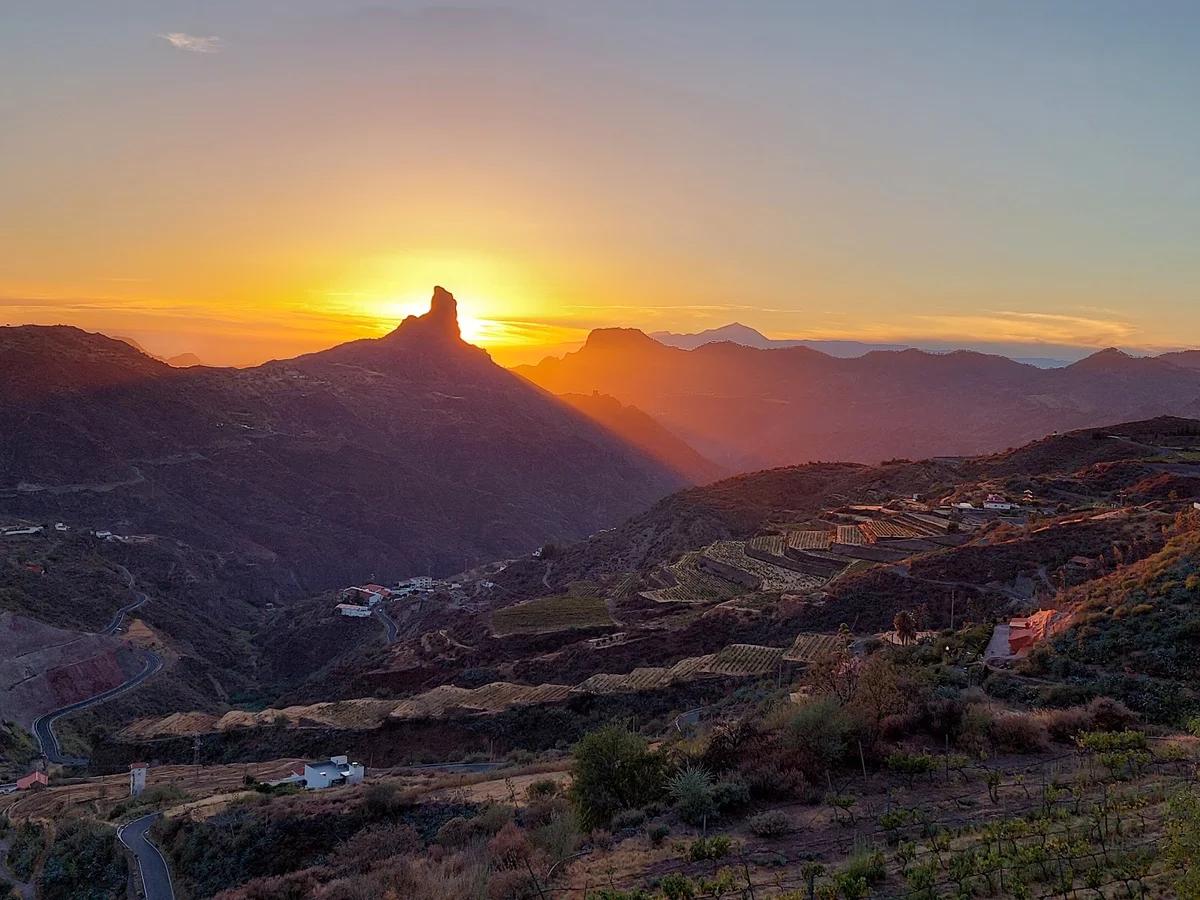
From Roque Bentayga, the scale of the Caldera de Tejeda is almost impossible to take in: ravines, ridges and rock formations rise and fall across the heart of Gran Canaria.
You are not looking at the caldera from the outside.
You are standing right in the middle of it.
And if you can, stay until late afternoon.
Just before the sun disappears, the last light falls almost horizontally across the mountains, catching one ridge after another. Every fold and scar in the landscape seems to emerge at once. The earth changes colour, the rocks glow and the enormous relief of the caldera becomes visible in a way midday light cannot reveal.
It feels cinematic — almost unreal.
Perhaps this is when the name Sacred Mountains begins to make emotional sense. Long before us, people stood within this same landscape, watched the movement of the sun and gave particular places within it meaning. Today the territory forms part of the UNESCO-listed Risco Caído and the Sacred Mountains of Gran Canaria Cultural Landscape.
For a few minutes, simply watch.
You don’t need anyone to tell you these mountains are extraordinary. At sunset, they show you themselves.
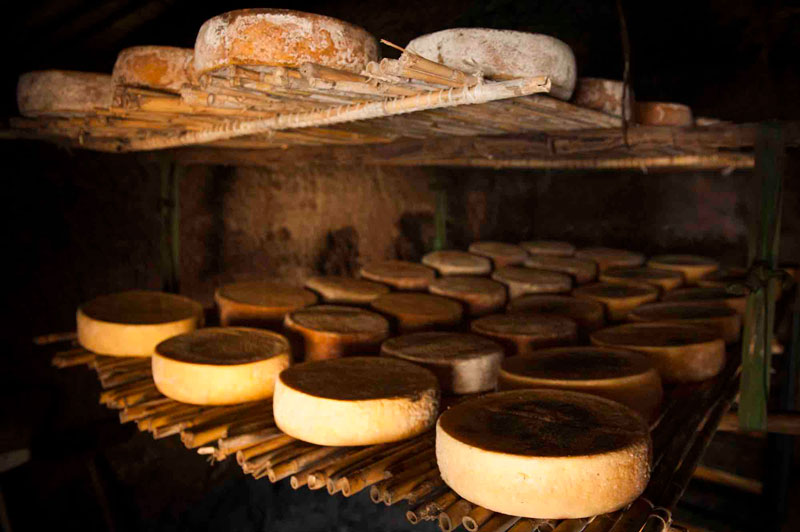
Cheese from the Gran Canaria Highlands: When the Mountains Become Flavour
From the ancient Canarians, one tradition continued through the centuries and remains deeply rooted in Gran Canaria today: livestock farming and cheese making.
Gran Canaria has more than 80 artisan cheese dairies, many of them small family businesses. Around Tejeda, the relationship between animals and territory becomes particularly fascinating.
Here you will hear people talk about quesos de cumbre — highland cheeses.
The animals graze across terrain where vegetation, humidity, altitude and exposure can change dramatically from one slope to another. What grows under their feet eventually becomes part of what you taste.
This is also a territory where transhumance has survived. For generations, shepherds have moved their herds across Gran Canaria in search of seasonal pastures, following old paths between different areas and altitudes.
Small dairies around Tejeda continue this tradition. Quesería Naroy, run by twin sisters Beatriz and Natalia Mayor, works with its own goats and sheep and maintains grazing and transhumance; its cheeses have been recognised locally, regionally and at the World Cheese Awards. Manjar de Tejeda, in La Culata, also produces artisan goat’s and sheep’s milk cheeses.
The awards are worth mentioning, but they are not the most interesting part of the story.
The landscape is.
When you taste one of these Gran Canaria mountain cheeses, you are tasting animals moving through volcanic territory, feeding from different pastures as the seasons change, guided by knowledge passed down for generations.
And those shepherds left us something else: paths.
So now that we understand the cheese, it is time to follow the landscape on foot.
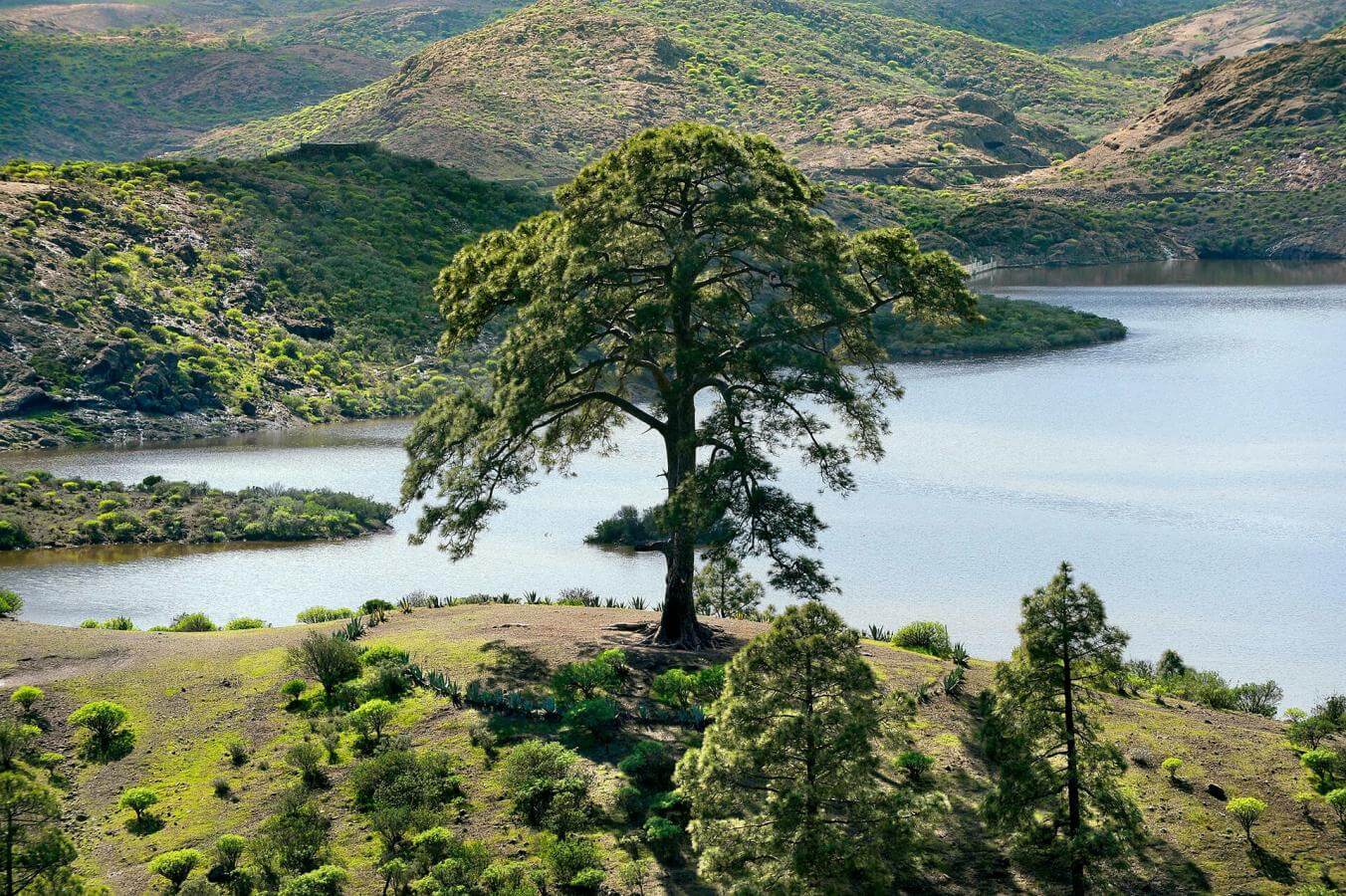
Hiking in Gran Canaria: Follow the Water to Presa de las Niñas
Roque Nublo may be one of the most famous places for hiking in Gran Canaria, but our walk takes us towards a greener, more humid corner of the southern highlands: Presa de las Niñas.
Surrounded by Canarian pine forest, the reservoir feels almost unexpected. Water, pine trees and volcanic rock completely change the atmosphere, particularly after the wetter months.
The reservoir tells another island story: where water has always been precious, dams transformed how it could be stored for agriculture and communities.
And among these pines is one of the characters of our walk: Casandra.
The Pino de Casandra, an enormous old Canarian pine, has watched over this landscape for generations. Stop beneath it. The Canarian pine is remarkably adapted to this volcanic island and capable of regenerating after fire — one reason these forests remain such an extraordinary part of Gran Canaria’s highlands.
Presa de las Niñas is also a popular local meeting place, with picnic tables, barbecues, toilets and a camping area — a favourite for families and friends spending the day together. Camping requires prior authorisation and fire restrictions must be checked.
Different hiking trails start in and around this landscape, so choose one that suits your time and ability. The official Tejeda trail network offers further routes and maps.
You don’t need a famous summit for every great walk.
Sometimes one of the best things to do in Gran Canaria is simply to follow the water and walk beneath the pines.
Official Tejeda hiking trails and routes — Tejeda official website
Cruz de Tejeda: Where Paths, Landscape and a Vision of Gran Canaria Meet
Long before there was a Parador or a traveller stopping here for the views, people were already meeting at Cruz de Tejeda.
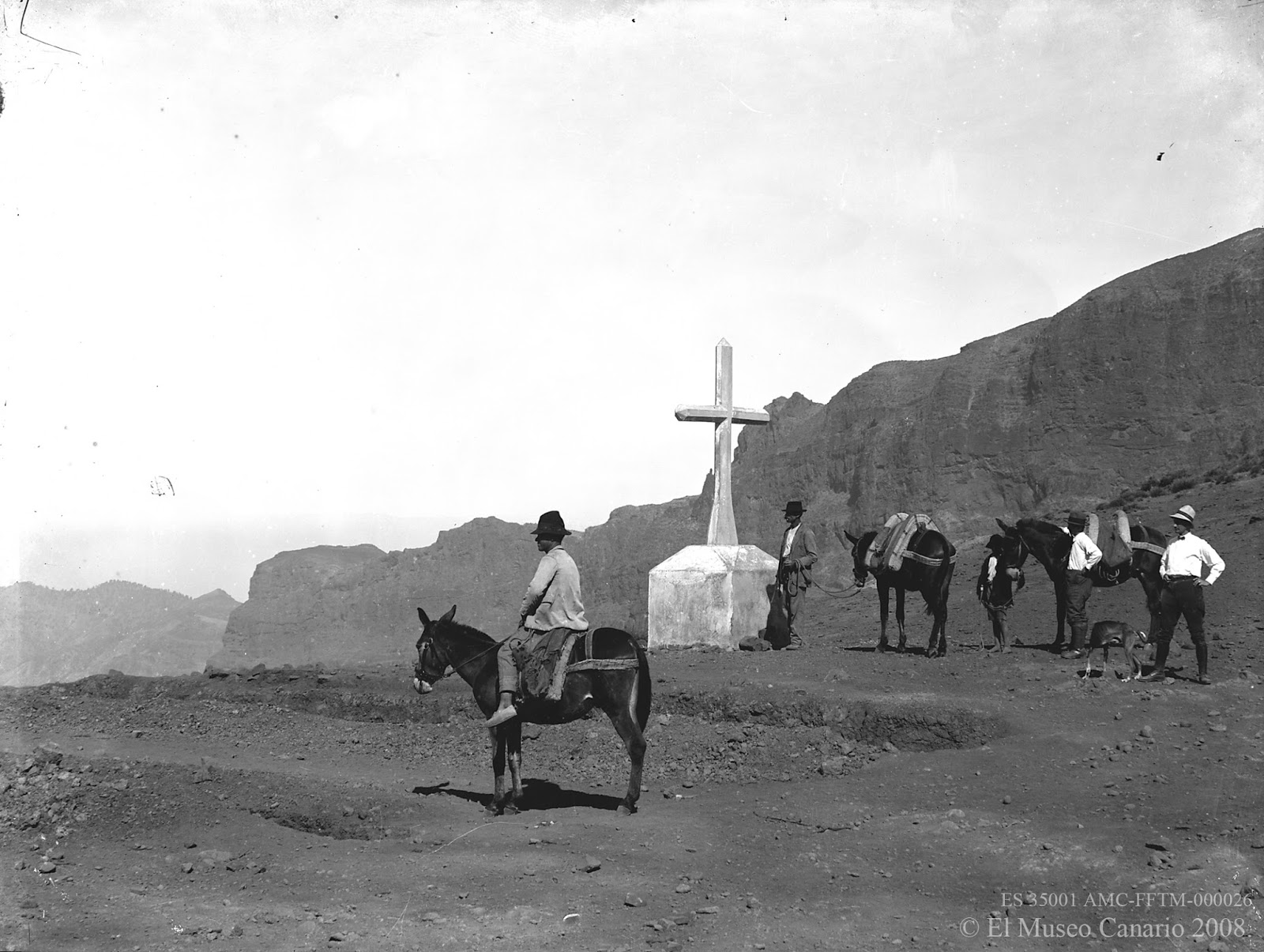
At almost 1,600 metres, old mountain paths converged here before descending towards different sides of Gran Canaria. People and livestock crossed them, carrying goods and connecting mountain communities.
The large stone Cruz de Tejeda — Cross of Tejeda — still stands opposite the Parador. Around it, the little market stalls preserve something of that old sense of arrival and exchange: a place to stop, talk, eat and take something from the mountains home with you.
Now that you know about shepherds, transhumance and quesos de cumbre — highland cheeses — this is a particularly good place to look for one.
The way we travel has changed. The reason for meeting here somehow survived.
But something else happens at Cruz de Tejeda.
The island changes sides.
As you cross towards Tejeda, you move onto the southern face of the mountains. Behind you, the trade winds push their great sea of clouds against the northern slopes. Ahead, the landscape opens towards the immense Caldera de Tejeda. In only a short distance, the light, vegetation, temperature and feeling of the landscape begin to change.
Standing at this threshold is the Parador de Cruz de Tejeda.
Walk inside.
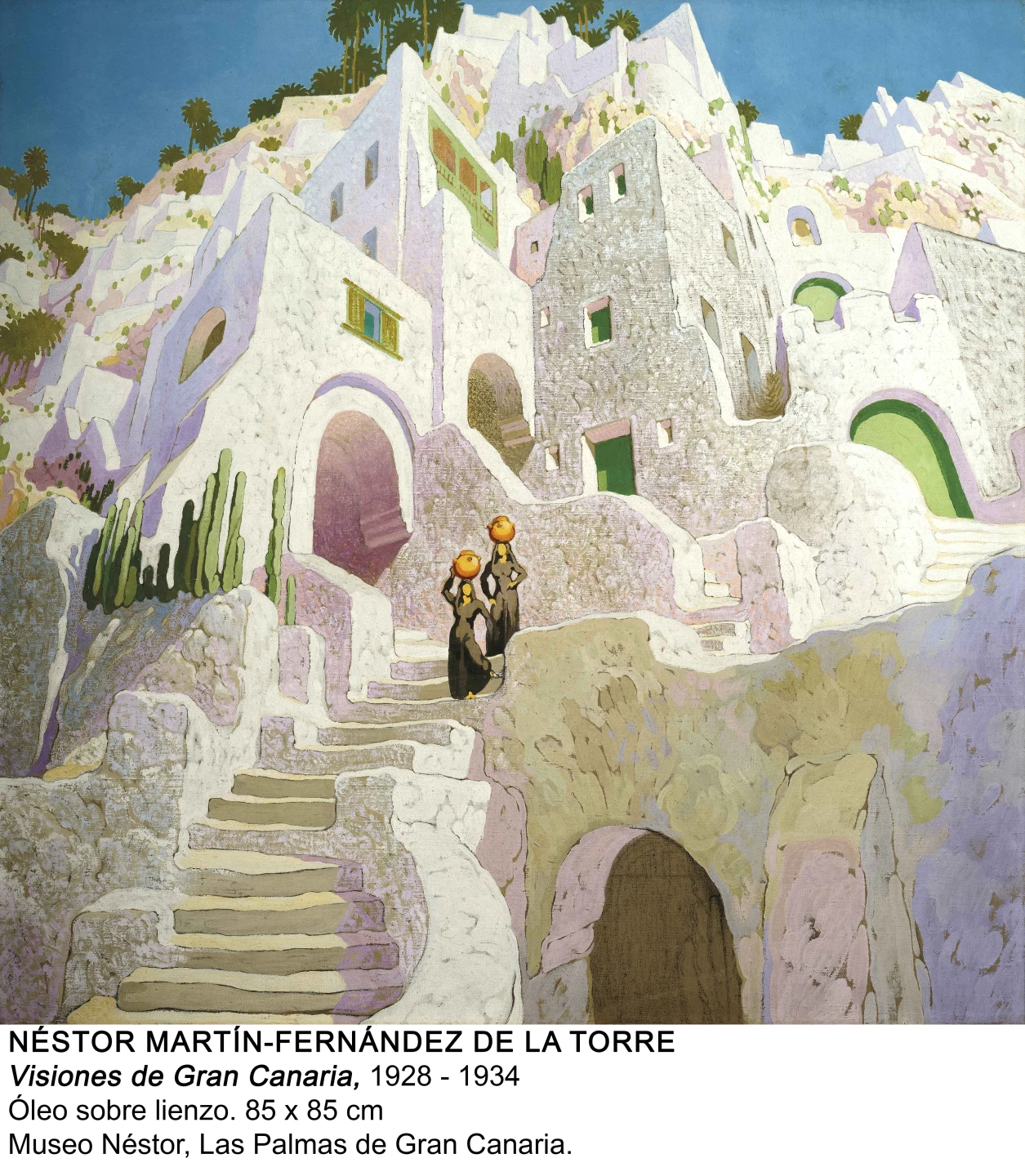
Almost a century ago, another Canarian looked at this landscape and understood the extraordinary value of what Gran Canaria already possessed. His name was Néstor Martín-Fernández de la Torre.
A modernist and symbolist painter, muralist, decorator and stage designer, Néstor became one of the defining figures of Canarian art. He is especially known for his great pictorial cycles Poema del Atlántico — Poem of the Atlantic — and Poema de la Tierra — Poem of the Earth.
After years abroad, Néstor returned permanently to Gran Canaria in 1934 with another way of seeing home. He imagined how the island could elevate its own landscape, architecture, vegetation, crafts and traditions.
He called this Tipismo — a creative reinterpretation of Canarian character, not simply to preserve the past but to give the island a recognisable identity for the future.
Between 1928 and 1934 he created Visiones de Gran Canaria — Visions of Gran Canaria: white villages climbing hillsides among Canarian vegetation and dramatic terrain, with echoes of the Greek islands. He used what he had seen elsewhere to reveal the potential of home.
And at Cruz de Tejeda, part of that vision became real.
His brother, architect Miguel Martín-Fernández de la Torre, was commissioned to redesign the original mountain lodge project with a distinctly Canarian character. Néstor contributed to its conception and interiors.
The building has evolved and parts were damaged by the 2017 wildfire, but traces of that vision remain.
Find the lounge. Find Néstor’s fireplace. Then look outside.
The Caldera de Tejeda is there again, now framed by a building conceived to become part of the landscape rather than simply observe it.
That is why we like to think of the Parador differently.
Not simply as a hotel.
As an experience — and, in its own way, a living museum.
Then continue down towards the village. Behind you, the sea of clouds may still be cascading over the northern mountains. Ahead, southern light falls into the great volcanic caldera.
Same island. A completely different landscape.
And Tejeda is waiting below.
Tejeda Village: Now It’s Time to Taste the Territory
By now, you have walked enough.
Now it is time to rest — and eat the territory.
Walk into old Tejeda: white houses cascading down the mountainside, narrow streets, little terraces and the enormous caldera beyond.
Here, almost at the end of our journey, something beautiful happens.
The old Tejeda and the new one meet.
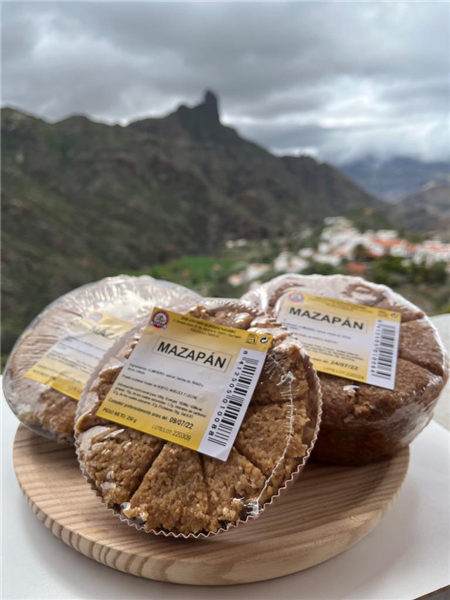
A few metres from the church of Nuestra Señora del Socorro — Our Lady of Perpetual Help — you will find Dulcería Nublo, but the story began before the shop existed.
Dolores Navarro and her sister used to make marzipan and bienmesabe at home and sell their sweets after Sunday Mass, beneath a tree beside the church.
Bienmesabe — literally “it tastes good to me” — is a traditional Canarian almond cream made with ground almonds, sugar and egg yolk.
So before going inside the pastry shop, look towards the church. That little piece of the village is part of the story you are about to taste.
In 1946, Dolores and her husband founded Dulcería Nublo, turning a domestic tradition into a Tejeda institution. Almonds meant food, income and recipes prepared at home; even their shells were traditionally used with firewood in the bakery’s oven.
The famous almond trees of Tejeda stop being merely something beautiful to photograph.
For a moment, you can taste why they were here.
Then walk a few steps further and Tejeda changes generation.
At LaLexe, chef Borja Marrero interprets many of those same ideas — territory, livestock, agriculture and local flavours — through something completely contemporary: ice cream.
His gastronomic world begins in the landscape: milk from his own livestock, produce from his organic farms, Tejeda almonds, prickly pear and other island ingredients. One creation even used pinocha — Canarian pine needles — to smoke white chocolate with goat and sheep milk.
Think about that.
Earlier we walked beneath the Canarian pines. We followed the livestock. We talked about the almonds. We stood inside the Caldera de Tejeda.
And now someone has put those landscapes into an ice cream.
Borja has described a creation made with goat and sheep milk and bienmesabe — the traditional Canarian almond cream — as a flavour capable of transmitting the territory of the Caldera de Tejeda.
That is exactly why we have brought you here.
At Dulcería Nublo, a family tradition that began with two sisters making almond sweets at home beside the church. At LaLexe, a new generation asking a different question:
What can Tejeda taste like today?
Almost eighty years separate those two stories, yet you can walk between them in minutes.
One preserves a flavour.
The other interprets it.
And both lead back to exactly the same place: the land.
Experience Tejeda with Us
Would you like to experience Tejeda beyond the postcard?
At Handmade Tours, we organise private tours to Tejeda, combining the extraordinary landscapes and stories of the mountains with a visit to a traditional cave winery and lunch in the village of Tejeda.
A private journey through landscape, wine, gastronomy and the people who make this part of Gran Canaria so special.