
Valleseco: The Greenest Side of Gran Canaria
Where mist, apples and cider tell a different story of the island
Gran Canaria is often imagined through sunshine, ocean views and long days by the coast. And yes, its beaches, together with the spring-like weather enjoyed all year round in the south of the island, are part of what makes Gran Canaria so attractive. But travel inland and the island begins to tell a very different story.
Welcome to Valleseco — literally, “dry valley” — a name that feels almost ironic once you arrive. Here, the trade winds and the sea of clouds bring moisture to the mountains, wrapping the landscape in mist and creating a cool, humid environment that can feel surprisingly cold.
But that humidity does much more than change the way Valleseco feels. It has shaped its landscape, influenced what grows here and become part of the identity of the municipality itself.
And perhaps the best way to understand that story is through something rather unexpected in Gran Canaria: an apple.
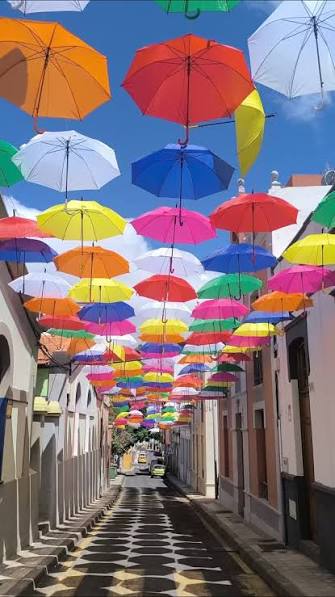
Valleseco (“Dry Valley”): a name that tells the wrong story
The name Valleseco – literally “Dry Valley” – can be misleading. Far from describing the climate of the municipality, it originally referred to the central valley, which had fewer springs and water sources than the neighbouring Barranco de la Virgen and Madrelagua. As the main settlement developed there, the name eventually came to identify the entire municipality.
Barranco is the Spanish word commonly used in the Canary Islands for a ravine, one of the defining features of the islands’ volcanic landscape.
The irony becomes obvious as soon as you explore the area. Located on the northern slopes of Gran Canaria and directly influenced by the trade winds, Valleseco is characterised by high humidity, frequent mist and the presence of the sea of clouds.
Water has shaped much more than its landscape. Springs, irrigation channels, fountains, old washing places and mills are part of Valleseco’s rural heritage, revealing how closely everyday life here has always been connected to this precious resource.
Even today, the relationship between Valleseco and its climate is impossible to miss. In the main square, a sculpture of a couple under an umbrella offers perhaps the simplest clue: in this supposedly “dry valley”, humidity is part of the story.
When Gran Canaria weather changes the landscape
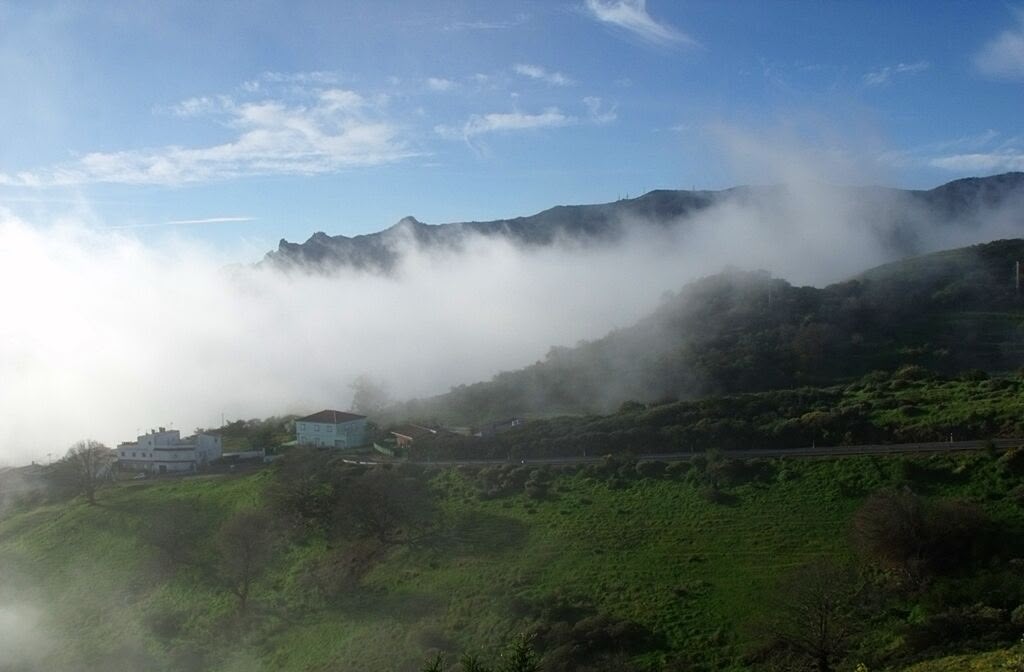
To understand Valleseco, you first need to look up. Much of what happens here begins with the trade winds, which carry moist Atlantic air towards the northern and north-eastern slopes of Gran Canaria. As that air rises over the mountains, it cools and condenses, creating one of the island’s most characteristic natural phenomena: the sea of clouds.
Valleseco sits directly within this humid influence. At certain elevations, clouds frequently meet the mountains themselves, surrounding vegetation in tiny droplets of water. This phenomenon, known as horizontal precipitation, allows plants and trees to capture moisture directly from the clouds, adding water to the ecosystem even when it is not actually raining.
This is also why talking about Gran Canaria weather using only temperatures can be misleading. Valleseco can feel remarkably cold compared with the southern areas of the island. Humidity, cloud cover and wind completely change how the temperature is experienced — something you understand very quickly when you arrive without the right jacket.
But the most interesting consequence is not what the weather feels like. It is what that weather makes possible.
Because this combination of altitude and humidity has helped create the conditions for one of Valleseco’s most characteristic crops to thrive: the Reineta apple.
Average temperatures in Valleseco range from around 10.2°C in January to 20.2°C in August. But remember: with the humidity, cloud cover and trade winds, it can often feel considerably cooler than the thermometer suggests.
From humidity to Reineta apples
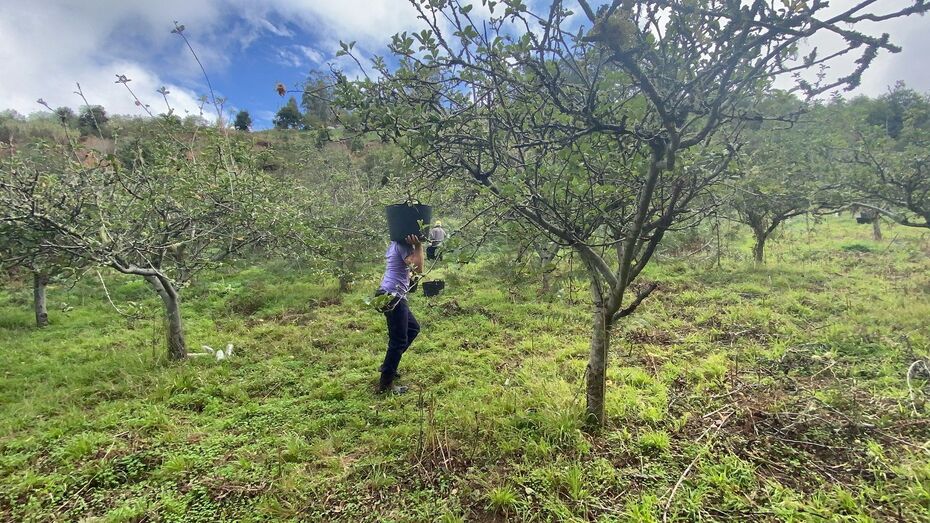
The Reineta apple did not become one of Valleseco’s symbols by accident. Its story here goes back to the 19th century, when local authorities began encouraging the planting of fruit trees as a way of bringing uncultivated land back into production and helping to protect the soil from erosion.
Among those trees were Reineta apple trees. They found exactly what they needed in Valleseco: altitude, moisture and cooler conditions. What began as an agricultural initiative gradually became part of the municipality’s landscape and identity.
Today, Valleseco has more than 24,000 registered apple trees, and the Reineta remains its most emblematic variety. Harvest time, usually towards the end of summer, transforms the apple from a familiar part of the landscape into the centre of local celebrations, gastronomy and production.
But the story did not stop with growing apples.
At some point, someone looked at all that fruit and asked the question that changes the value of a resource:
What else can we make from it?
And Valleseco found a very good answer: cider.
From apples to Gran Canaria cider
For years, apples were simply part of Valleseco’s agricultural landscape. Today, they are also behind one of the most interesting transformations taking place in the municipality: the development of a genuine Gran Canaria cider culture.
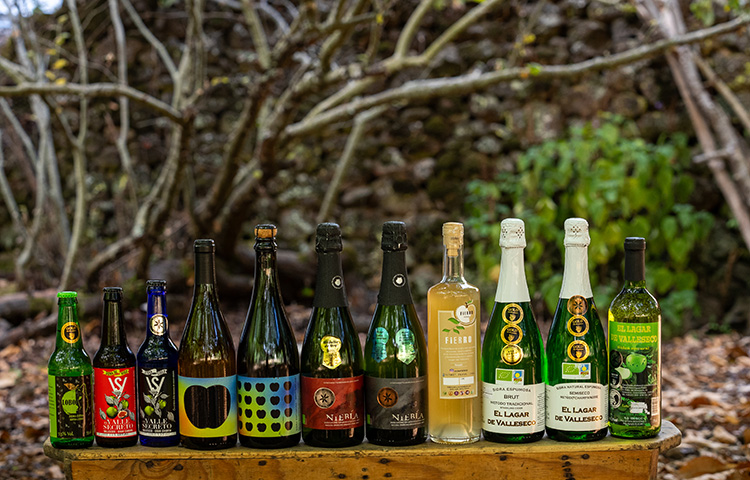
Local producers work primarily with Reineta apples, a variety whose characteristic acidity makes it particularly well suited to cider making. And there is no single interpretation. Natural, semi-dry and sparkling ciders are now being produced in Valleseco, demonstrating just how much can emerge from one local crop when producers begin experimenting with it.
What is particularly remarkable is how quickly these mountain ciders have moved beyond the island.
At the 2025 Sagardo Forum International Cider Competition, five producers from Valleseco — El Lagar de Valleseco, Fierro, Tuscany, Niebla and Sendero del Valle — collected 13 medals between them. The competition brought together 262 ciders from 19 countries, placing bottles made from apples grown in the mountains of Gran Canaria alongside ciders from some of the world’s established producing regions.
The international recognition continued at SISGA 2025, the International Hall of Gala Ciders held in Asturias, where 236 ciders from 63 cider houses and 18 countries competed. Producers from Valleseco returned home with another five awards across different categories.
And the list does not end there. At the Catavinum World Wine & Spirits Competition 2025, El Lagar de Valleseco received two gold and two silver medals in an international competition evaluating almost 3,000 wines and beverages from more than 20 countries.
There is another part of this story that deserves attention: organic cider.
Niebla was recognised as Best Organic Cider in the Canary Islands in both 2024 and 2025 at the official Agrocanarias cider competition. Its Etiqueta Negra was also named Best Cider in the Canary Islands in 2024. In 2026, the award for Best Organic Cider went to El Lagar de Valleseco, while Tuscany Brut received the Grand Gold Medal and Best Cider in the Canary Islands 2026.
These awards matter for more than the medals themselves. They show how a crop introduced to Valleseco in the nineteenth century has evolved into a small but increasingly sophisticated local industry, with different producers, styles and approaches — including organic production — capable of competing far beyond Gran Canaria.
And yet, despite that international recognition, the story remains intensely local.
The apples grow in these humid mountain landscapes, local producers transform them here, and some cider makers even use natural caves as spaces for fermentation and ageing. The cider is therefore not disconnected from the place that produces it. It is another expression of it.
So when you drink a cider from Valleseco, you are tasting much more than fermented apple juice. Behind it are the trade winds, the sea of clouds, the humidity captured by the mountains, the Reineta trees, generations of agricultural knowledge and a new generation of producers finding contemporary value in a resource that was already there.
The weather became an apple. And the apple became cider.
Discover more about Valleseco’s cider culture on the official Valleseco website.
Things to do in Valleseco
Valleseco is not a place you visit to tick off a long list of attractions. It is a municipality to walk through, taste and understand slowly.
A good starting point is the village itself. Around the historic centre you will find the Church of San Vicente Ferrer, home to a remarkable 18th-century German organ, and the sculpture Pareja con paraguas — the couple under an umbrella that seems almost like Valleseco’s unofficial answer to its own name.
From there, the landscape takes over.
Much of the municipality lies within the Doramas Rural Park, one of the places where you can begin to imagine the great laurel forest that once occupied a much larger part of northern Gran Canaria.
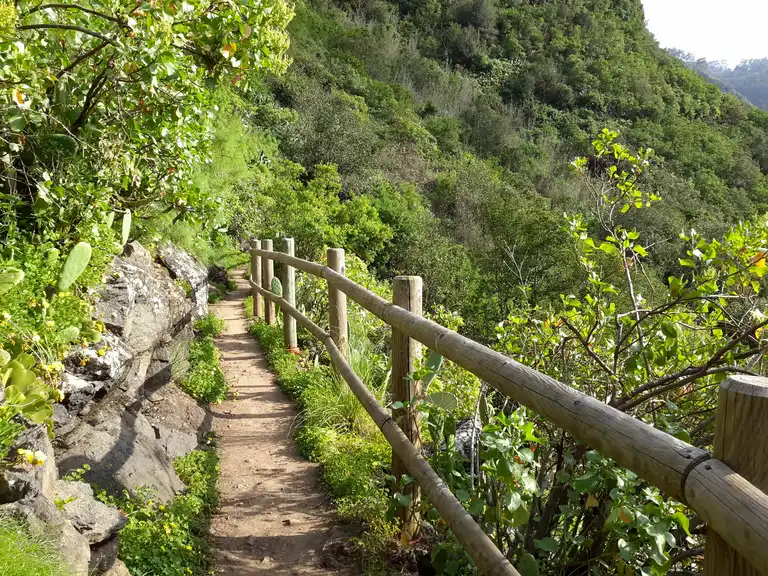
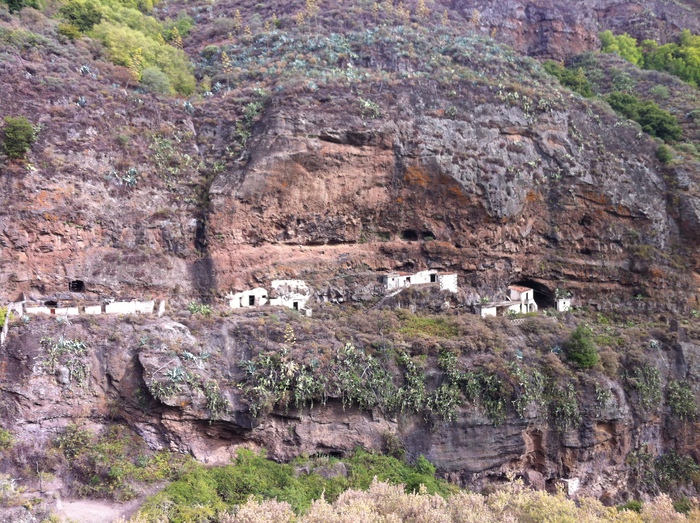
For hikers, one particularly interesting area is the Barranco del Andén and the route towards Valsendero. The trail passes through extraordinarily lush vegetation, with laurel forest, endemic species, old water galleries, cave houses and sections where water continues to run through the ravine. It is precisely the kind of walk that makes the climate we described earlier suddenly visible: humidity is no longer an abstract weather statistic; you can see what it has created around you.
The municipality also recommends walks around La Laguna and the ascent towards Pico de Osorio, where reforestation with native species such as fayas, heathers and laurels is helping to recover part of the vegetation associated with the ancient Doramas forest. Explore Valleseco’s official places of interest
There is an older layer to this landscape too.
Valleseco’s archaeological heritage is modest compared with some other parts of Gran Canaria, but several archaeological sites have been inventoried, including cave complexes around Barranco del Andén, El Maipéz and rock engravings at Caserón. Some caves may have been used by the island’s pre-Hispanic inhabitants, although the municipality itself points out that material evidence does not currently allow that origin to be confirmed in every case. Rather than a reconstructed archaeological attraction, what survives here is a much less obvious archaeological landscape, subsequently reused for housing, livestock and rural life.
And after walking, Valleseco should definitely be tasted.
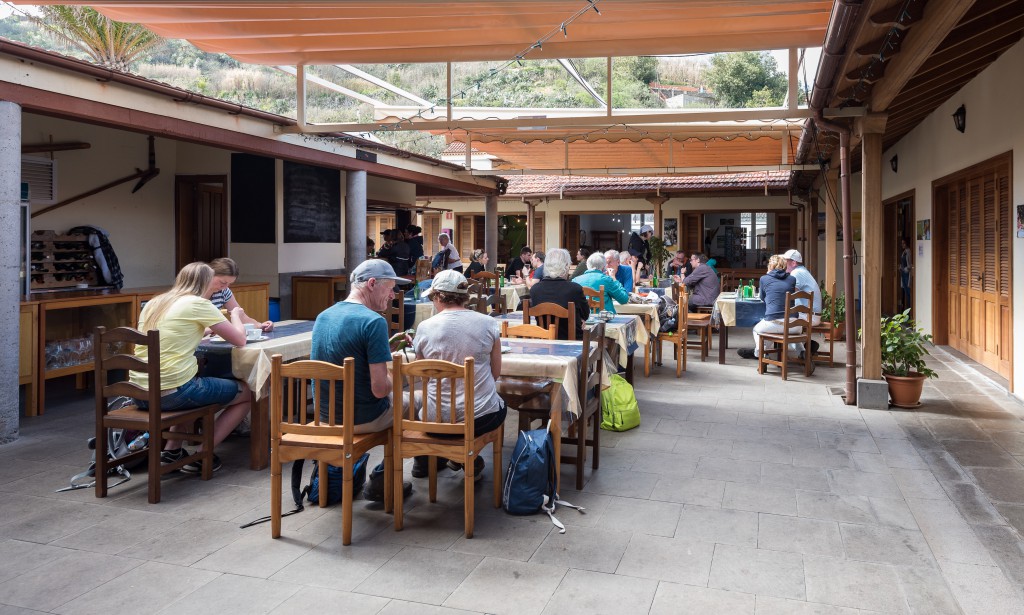
One of the best stops is Mercado Ecológico de Valleseco, also known as EcoValles. This is not simply somewhere to browse stalls. Visitors can buy certified organic products directly — fruit and vegetables, bread, pastries, wine, oils, jams, eggs and other locally produced foods — and there is also a café-terrace where food is prepared using ingredients from the market itself.
It is worth planning this stop rather than simply turning up. The market operates mainly around the weekend, and opening times can change, so check the official information before travelling specifically to visit it. Check the official EcoValles market information
And, of course, look for Valleseco cider.
After learning how the trade winds, humidity and Reineta apple are connected, tasting the finished product completes the story. The municipality itself has become an important centre for cider culture in the Canary Islands.
If you visit during apple harvest season, these connections become even easier to see. Apples and cider move from orchards into markets, restaurants, celebrations and local gastronomy. Landscape becomes agriculture; agriculture becomes food and drink; and those products become part of the social and cultural life of the municipality.
That may be the best way to experience Valleseco: not by looking for one spectacular attraction, but by following the connections between its landscape, its history, its people and what they produce.
Another side of Gran Canaria
Valleseco tells a story that is easy to miss if we understand Gran Canaria only through its coastline.
Here, the weather creates the landscape. The landscape determines what can grow. Agriculture becomes part of local identity, and something as simple as an apple can eventually become an internationally awarded cider.
The trade winds, the sea of clouds, the old water channels, the laurel forest, the Reineta orchards, the cider makers, the ecological market and the people who continue working this land are all pieces of the same place. Together, they create the Valleseco experience.
And perhaps that is what makes travelling around Gran Canaria so fascinating. We like to call it the endless island: despite being surrounded by water, it never seems to stop revealing something new with every visit.
You can leave the spring-like weather of the southern coast behind and, not long afterwards, find yourself walking beneath clouds, surrounded by vegetation, looking for a jacket and wondering how an island famous for sunshine led you to a glass of mountain cider.
Valleseco may mean “Dry Valley”.
But by the time you leave, you will understand why its name only tells the beginning of the story. And Gran Canaria is that endless island.
Experience Valleseco with us!
Would you like to discover Valleseco beyond the usual routes? At Handmade Tours, we organise private experiences in Valleseco combining local cider producers, local products, landscapes and the stories behind them, designed around the people and places that make this part of Gran Canaria unique.
Ask us to create your private Valleseco experience.